Most people have tried a generic daily reminder — "Time to work out!" at 6pm every day — and most people have also learned to ignore it within a week. A reminder that isn't tied to a specific, pre-decided plan just becomes noise. The reminders that actually work are specific, tied to a real schedule, and paired with a workout that's already decided.
Why Generic Reminders Stop Working
A vague reminder requires you to do all the remaining work yourself in the moment — decide what to do, find the workout, figure out sets and reps — right when you're least motivated to do any of that. After a few days of dismissing a notification you're not ready to act on, your brain learns to treat it as background noise, and it stops functioning as a cue at all.
What Makes a Reminder Actually Effective
- Specificity — "Leg day, 4 exercises, ~35 min" is far more actionable than "Time to work out"
- Timing tied to your actual schedule, not an arbitrary fixed hour that ignores what your day looks like
- A direct link to the plan, so tapping the reminder takes you straight to today's session, not a menu of decisions
- Consistency over intensity — the same reminder pattern repeated is more effective long-term than an occasional aggressive push notification
Building a Scheduling System Around Your Program
Reminders work best as the final layer on top of an actual schedule and program — not as a substitute for one. The order that works is: build or import your weekly program first, decide which days map to which sessions, and only then set reminders that point directly at that plan.
Stop losing workouts in your camera roll.
SetForge turns saved Instagram & TikTok workout videos into structured, trackable training programs — automatically.
How SetForge Turns Scheduling Into Something You'll Actually Follow
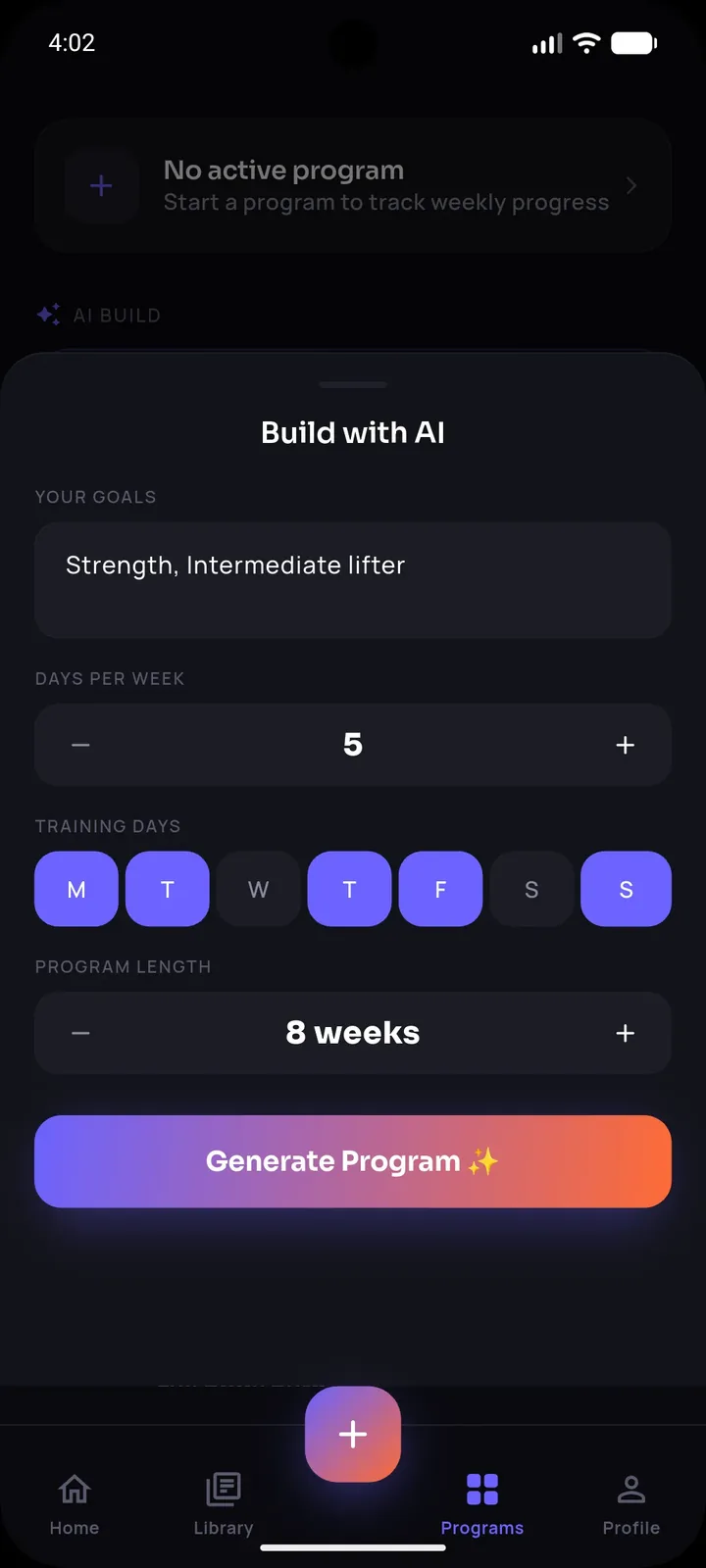
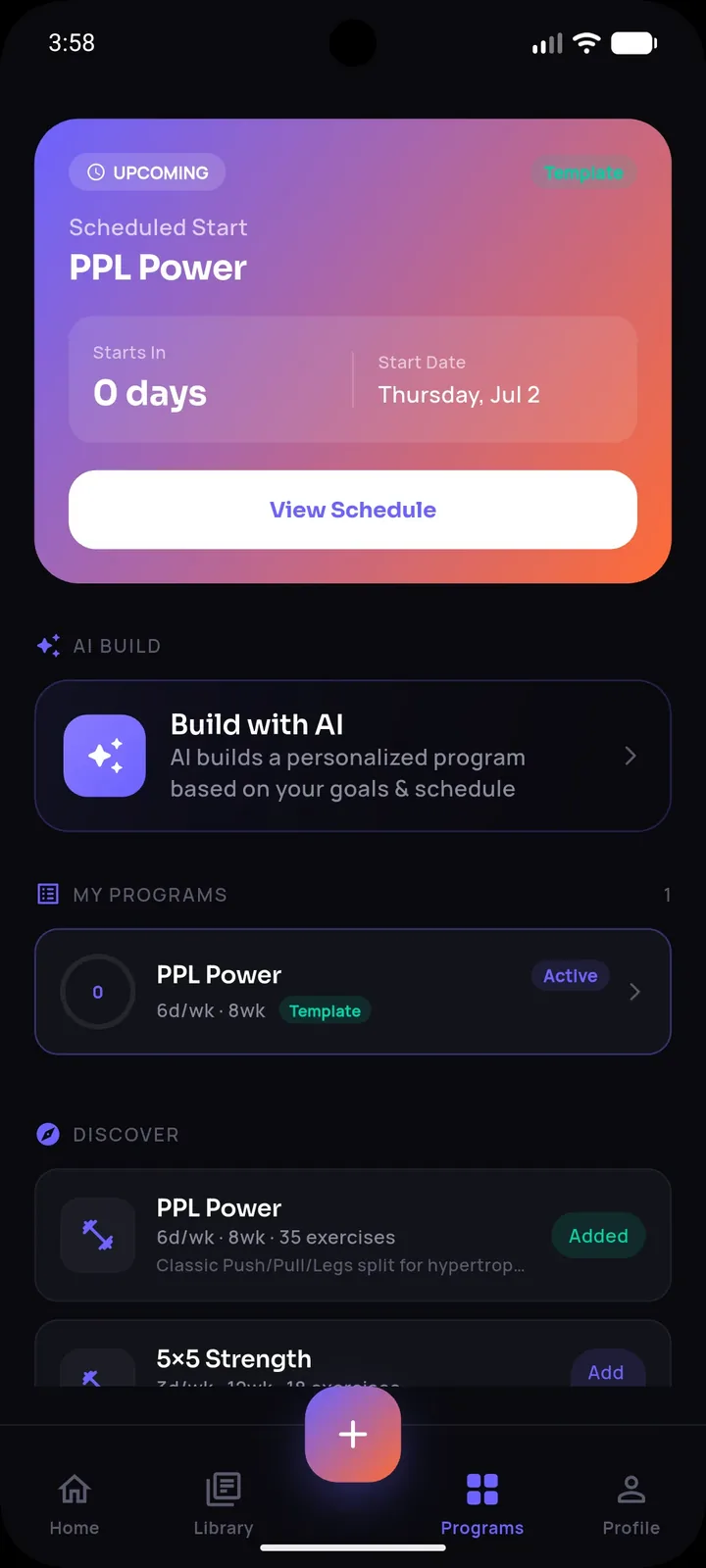
SetForge's Program Builder lets you set up a structured multi-week program — push/pull/legs, upper/lower, or a fully custom split — and tracks your exact position in it, so there's never ambiguity about what today's session should be. Because the app already knows what workout comes next, opening SetForge on a scheduled training day takes you directly to something specific and ready to run, rather than a decision you have to make from scratch.
Achievements, XP, and streak tracking add a layer of motivation on top of the schedule itself — a visible, growing record of consistency that reinforces the habit beyond just avoiding a missed notification.
Handling the Inevitable Missed Day
Even a well-designed reminder and scheduling system will occasionally get missed — the mistake is treating one missed day as a reason to abandon the system rather than simply picking back up at the next scheduled session. A single skipped workout has almost no real impact on long-term progress; the pattern of quitting the entire system after a miss is what actually derails consistency.
A Practical Weekly Reminder Setup
- Monday, Wednesday, Friday mornings: Reminder tied directly to that day's specific session in your program
- Sunday evening: A different kind of reminder — a prompt to review the upcoming week's schedule and confirm it still fits your calendar
- No reminders on rest days — avoid diluting the signal with notifications on days you're not meant to train
Frequently Asked Questions
Why do generic workout reminders stop working after a while?
They require too much in-the-moment decision-making to act on, so they get dismissed repeatedly and your brain learns to treat them as background noise.
Should reminders come before or after building a schedule?
After — a reminder pointing at an already-decided, specific session is far more effective than one prompting you to figure out a workout from scratch.
How does SetForge's Program Builder support a reminder-based schedule?
It tracks your exact position in a structured multi-week program, so a reminder that opens the app leads directly to a specific, ready-to-run session.
What should I do if I miss a scheduled workout day?
Simply resume at your next scheduled session — a single missed day has minimal long-term impact, but abandoning the whole system after a miss does.
Do achievements and streaks actually help with consistency?
They provide a visible record of your consistency over time, which can reinforce the habit beyond just responding to a single day's reminder.
The Bottom Line
Reminders alone rarely build lasting consistency — what works is a specific, scheduled plan that a reminder simply points to. Build your program first, tie reminders directly to it, and treat the occasional missed day as a non-event rather than a reason to abandon the system.