Beginners are often presented with too many options at once — full body, upper/lower, PPL, bro splits, and a dozen opinions about which is "correct." The honest answer is that most well-structured splits work reasonably well for beginners, but one specific approach removes the most guesswork and sets up the best foundation.
The Recommendation: Full-Body, 3 Days a Week
For most beginners, a full-body split trained three non-consecutive days a week (like Monday/Wednesday/Friday) is the clearest, most forgiving starting point. It provides enough frequency per muscle group to build strength efficiently, fits a manageable weekly time commitment, and leaves recovery days built in without needing careful planning.
Why This Specific Structure Works So Well for Beginners
- Higher frequency per muscle group than most beginners would get with a split routine, which accelerates early strength gains
- Built-in recovery from the non-consecutive day structure, reducing injury risk while technique is still developing
- Simplicity — three sessions to plan and remember is far less overwhelming than a 5-6 day split
- Fast feedback loop — hitting each muscle group three times weekly means you notice stalls or progress quickly
What a Sample Full-Body Session Looks Like
- Squat variation — 3 sets of 8-10 reps
- Push movement (bench or overhead press) — 3 sets of 8-10 reps
- Pull movement (row or lat pulldown) — 3 sets of 8-10 reps
- Hinge movement (Romanian deadlift or hip thrust) — 3 sets of 8-10 reps
- One accessory movement for a lagging area — 2-3 sets of 10-15 reps
Repeating this same structure (with the same or very similar exercises) three times a week for the first several months lets you clearly track progression without constantly introducing new variables.
Stop losing workouts in your camera roll.
SetForge turns saved Instagram & TikTok workout videos into structured, trackable training programs — automatically.
How SetForge Removes the Remaining Guesswork
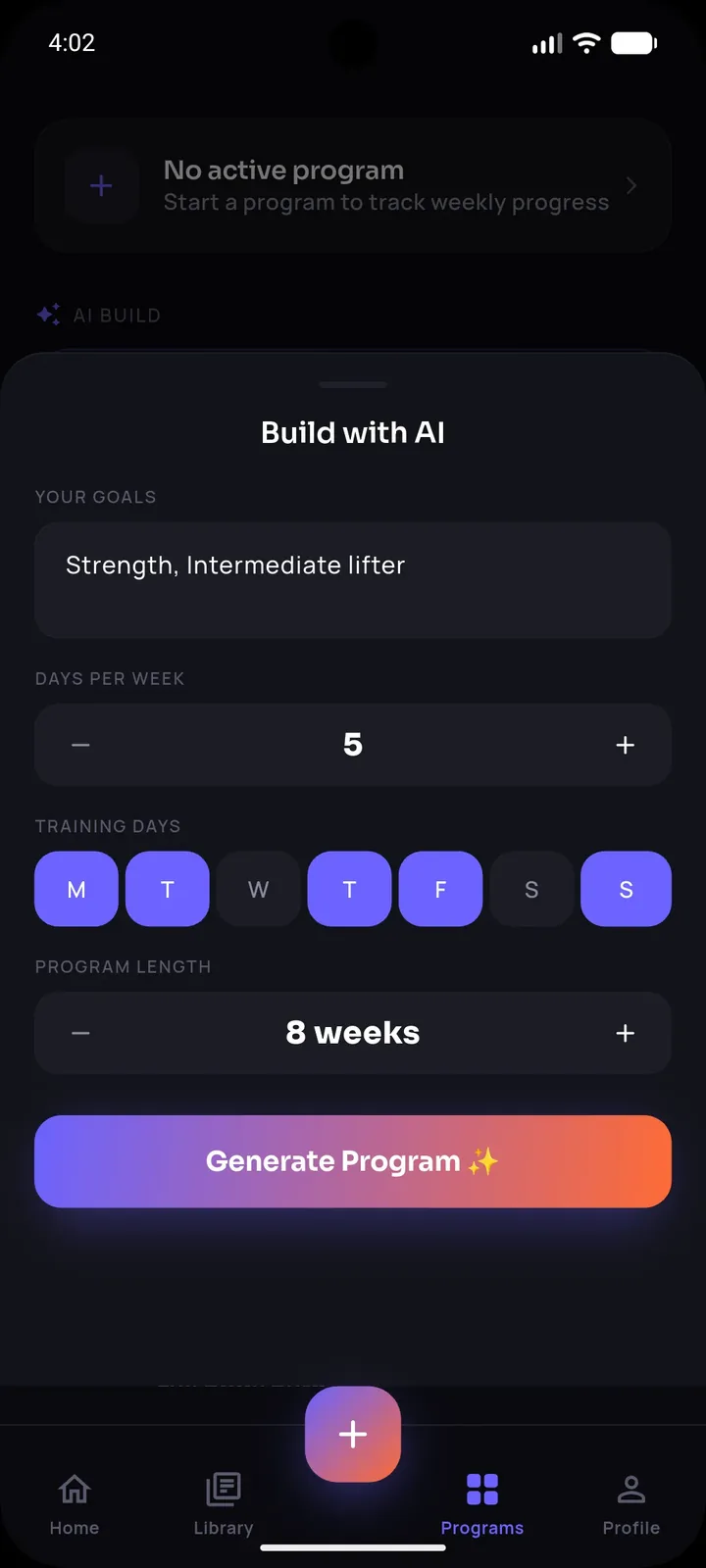
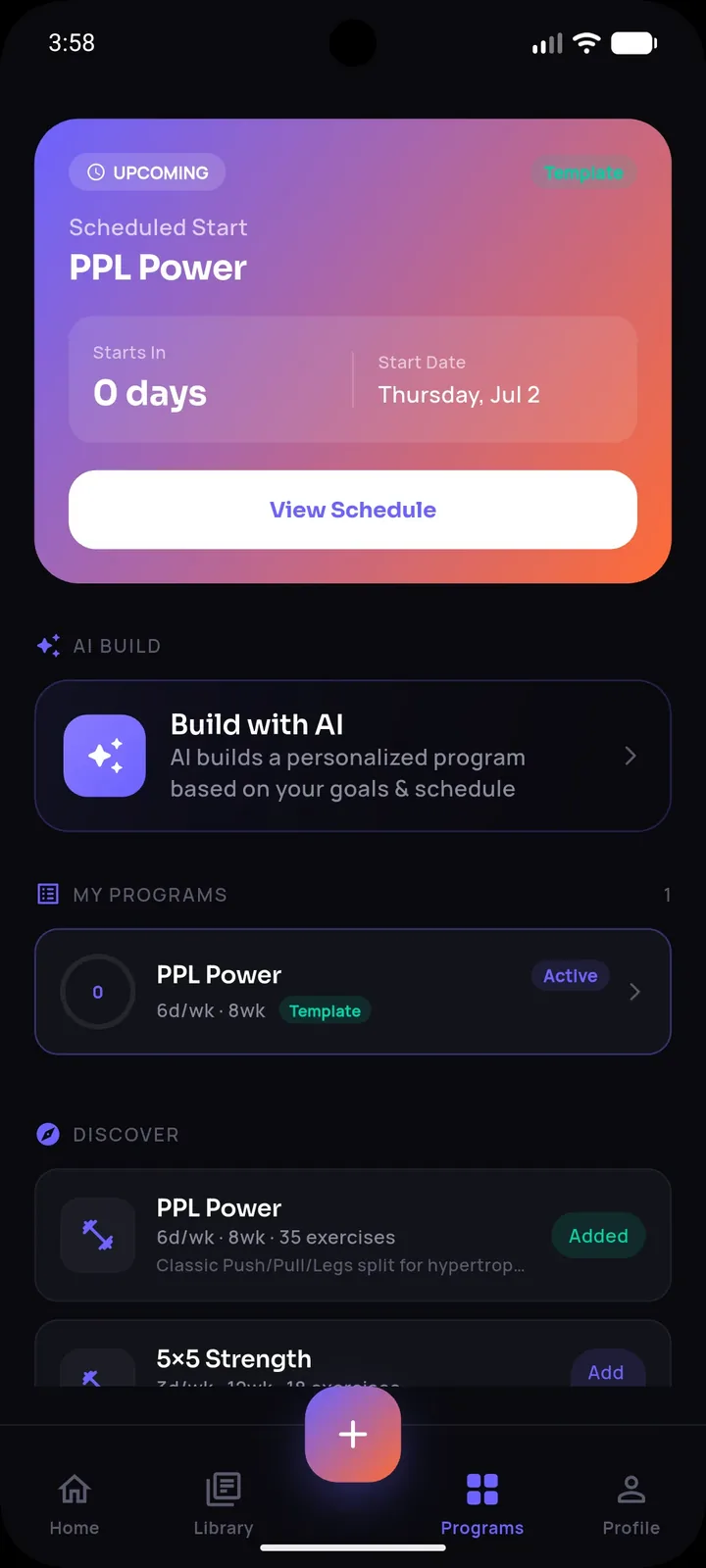
SetForge's Program Builder can set up this exact structure as a repeating multi-week program, tracking your position automatically so there's no ambiguity about what today's session should be. Its 500+ exercise library, filterable by muscle group, helps you pick appropriate variations for each movement pattern without needing prior exercise knowledge, and Smart Gym Mode's display of your previous performance gives a clear, concrete cue for progressive overload each session — add a rep or a small amount of weight when the previous numbers felt manageable.
When to Move Beyond This Starting Split
Most beginners can stay productively on a full-body, 3-day structure for 6-12 months. The signal to change isn't boredom — it's when consistent progression across your main lifts genuinely stops happening despite solid effort, sleep, and nutrition, at which point exploring an upper/lower or PPL split with higher volume becomes worth considering.
Frequently Asked Questions
Is full body really better than a split routine for beginners?
For most beginners, yes — the higher per-muscle-group frequency and built-in simplicity tend to produce better and more consistent early progress than a more complex split.
How many exercises should a beginner full-body session include?
4-5 exercises covering the main movement patterns (squat, push, pull, hinge, plus one accessory) is a reasonable, manageable structure.
Should I change exercises frequently as a beginner?
No — repeating the same or very similar exercises for several months makes it much easier to track and apply progressive overload clearly.
How does SetForge help a beginner follow this recommended split?
Its Program Builder can structure this exact full-body, 3-day plan as a repeating program, with the exercise library and Smart Gym Mode supporting exercise selection and progression tracking.
When should a beginner move to a more advanced split?
Typically after 6-12 months, once consistent progression on main lifts genuinely stalls despite good effort, sleep, and nutrition.
The Bottom Line
For most beginners, a full-body split trained three non-consecutive days a week removes the most guesswork and builds an efficient foundation — higher frequency per muscle group, simple to plan, and forgiving of recovery needs while technique develops. Stick with a consistent structure long enough to see genuine progression before considering a more complex split.