Push/pull/legs, upper/lower, and full body are the three most commonly recommended splits, and each gets defended online as though it's objectively superior. In reality, each is well-suited to different schedules, experience levels, and goals — the "best" one depends entirely on your specific situation.
Full Body: Training Everything Each Session
Full body splits hit all major muscle groups in every session, typically run 2-3 times per week. This suits people with limited weekly training days, beginners who benefit from higher per-muscle frequency at lower per-session volume, and anyone whose schedule can't reliably support 4+ sessions a week.
Upper/Lower: A Middle-Ground Frequency
Upper/lower splits alternate between upper body and lower body days, typically run 4 days a week. This offers higher per-muscle-group frequency than full body while still fitting a moderate weekly schedule, making it a popular choice for intermediate lifters with a reasonably consistent 4-day availability.
Push/Pull/Legs: Higher Frequency, Higher Time Commitment
PPL splits group muscles by movement direction and typically run 3 or 6 days a week. Run once weekly, it works similarly to a full-body split spread across more focused sessions; run twice weekly (6 days), it provides high per-muscle-group frequency well-suited to intermediate/advanced lifters chasing hypertrophy, provided their schedule genuinely supports that much training time.
Choosing Based on Your Actual Constraints, Not Preference Alone
- 2-3 days available: Full body is the clearest fit.
- 4 days available: Upper/lower balances frequency and recovery well.
- 5-6 days available: PPL (once or twice through) takes advantage of the higher frequency.
Choosing based on available days first, then picking the split that fits, produces better long-term adherence than picking a split you find impressive and forcing your schedule to accommodate it.
Stop losing workouts in your camera roll.
SetForge turns saved Instagram & TikTok workout videos into structured, trackable training programs — automatically.
How SetForge Supports All Three Approaches
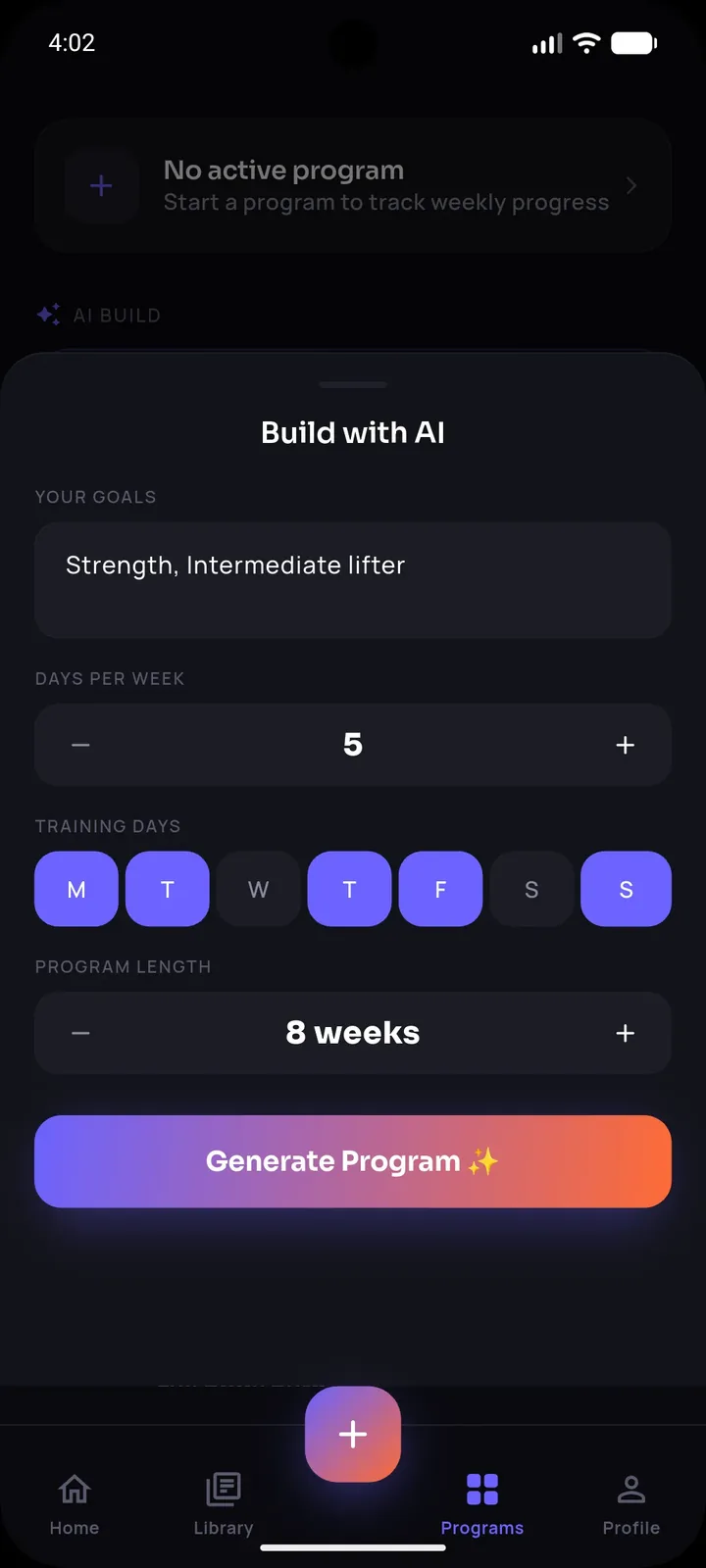
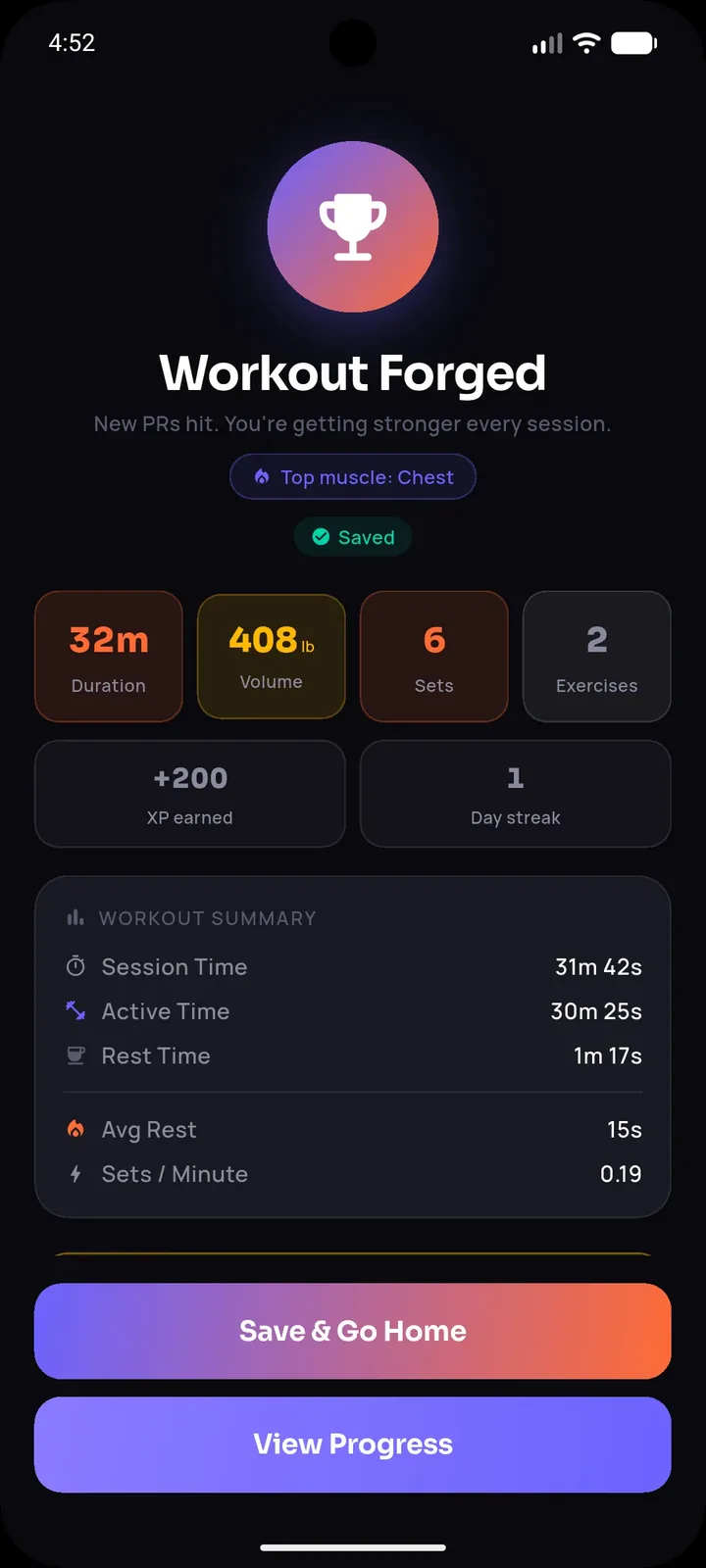
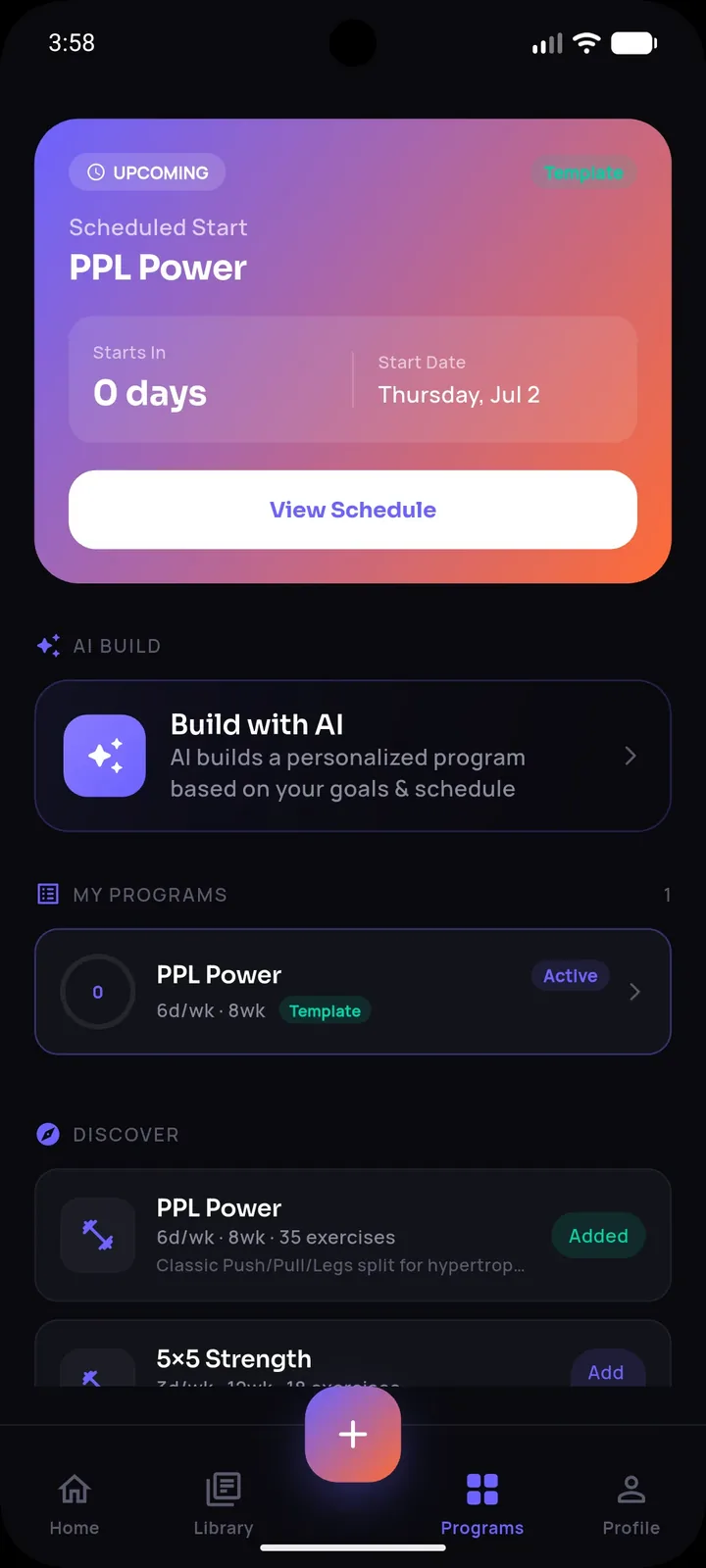
SetForge's Program Builder supports structured multi-week programs for any of these splits — full body, upper/lower, PPL, or a fully custom structure — and tracks your exact position within whichever one you choose. Because the underlying exercise library and tracking (Progress Analytics, muscle group breakdown) work the same regardless of split, you can switch between them over time as your schedule or goals change, without losing your accumulated training history.
Can You Switch Between Splits Over Time?
Yes, and it's often a reasonable thing to do as circumstances change — someone training full body during a busy season might shift to upper/lower or PPL once their schedule opens up, without needing to start their training history over. The split is a structural choice about how to arrange your training, not a permanent identity.
Frequently Asked Questions
Which split is best for building muscle fastest?
Higher-frequency splits like 6-day PPL can be effective for muscle growth, but only if your schedule and recovery genuinely support that volume — a split you can't sustain isn't actually the fastest path for you specifically.
Should beginners use PPL or full body?
Full body is often recommended for beginners due to simplicity and higher per-muscle frequency at manageable per-session volume, though a well-structured PPL can also work if the schedule supports it.
Can I switch splits without losing my training history?
Yes — SetForge's Progress Analytics and workout history persist across program changes, so switching splits doesn't mean starting your data over.
Is upper/lower better than full body?
Neither is universally better — upper/lower suits a 4-day schedule with slightly more volume per session, while full body suits lower weekly frequency well.
How do I decide between these three splits for myself?
Start with your honestly assessed available training days per week, then choose the split that matches that number rather than picking based on which sounds most advanced.
The Bottom Line
Push/pull/legs, upper/lower, and full body each have genuine strengths suited to different schedules and experience levels — none is objectively superior in every case. Choose based on your actual available training days, and don't hesitate to switch as your circumstances change over time.