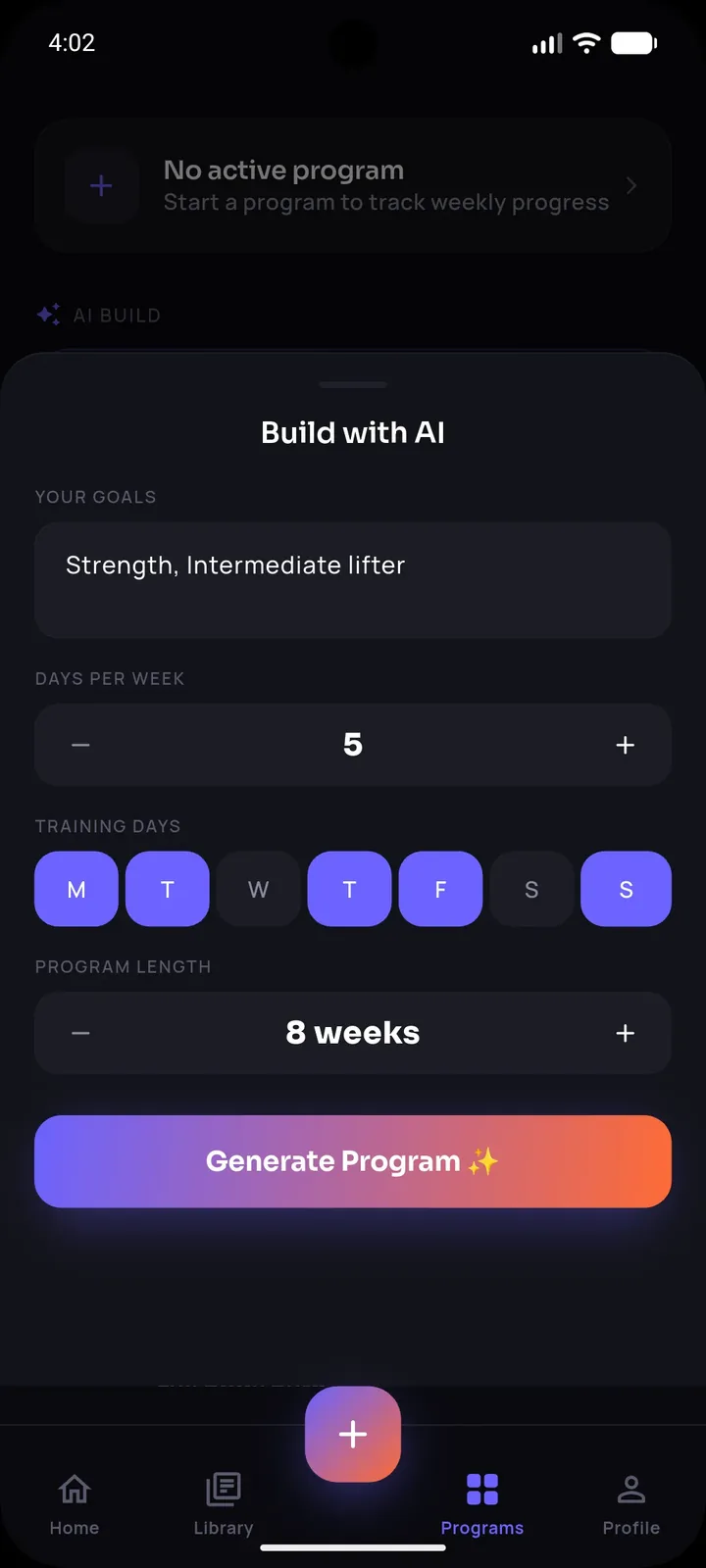
A lot of programs fail not because they're poorly designed in the abstract, but because they were built for a schedule the person doesn't actually have. A 6-day program is excellent on paper and useless in practice for someone who can realistically train 3 days a week. Structuring around your real schedule, not an aspirational one, is what actually makes a program sustainable.
Step 1: Audit Your Actual Available Days Honestly
Before choosing a split, look at your last month realistically — not how many days you'd like to train, but how many you actually did, accounting for work, family, and normal life disruptions. Build around that real number, not an optimistic one.
Matching Splits to Common Weekly Patterns
- 2-3 days available: A full-body split, training the whole body each session, fits limited frequency well.
- 4 days available: An upper/lower split (two upper days, two lower days) balances frequency and recovery nicely.
- 5-6 days available: A push/pull/legs split, potentially repeated twice in the week, takes advantage of higher frequency.
- Inconsistent/variable schedule: A flexible full-body or upper/lower approach that can be compressed or expanded week to week, rather than a rigid 6-day split that falls apart the moment a day is missed.
Building in Flexibility for Real Life
Even a well-matched split benefits from a built-in contingency plan — deciding in advance what happens if you miss a day (do you skip it, shift everything back a day, or combine two sessions) prevents a single disruption from derailing your entire week's structure.
Stop losing workouts in your camera roll.
SetForge turns saved Instagram & TikTok workout videos into structured, trackable training programs — automatically.
How SetForge's Program Builder Adapts to Your Schedule
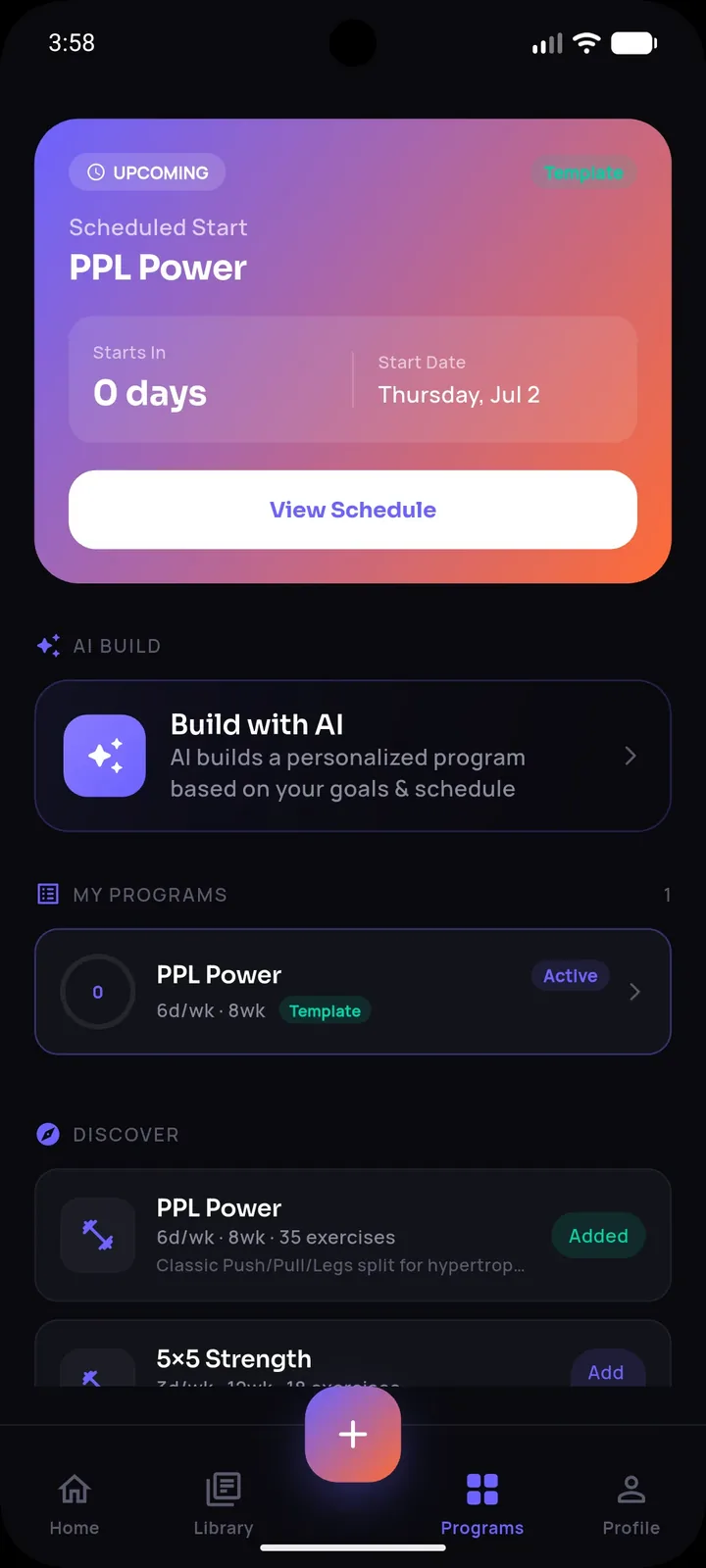
SetForge's Program Builder supports structured multi-week programs — full-body, upper/lower, push/pull/legs, or a fully custom split — and tracks your exact position within it, which matters especially when real life causes a missed or shifted day. Rather than forcing a rigid calendar-based schedule, the program tracks progression through the sequence itself, so missing Wednesday's session doesn't mean losing your place — you simply pick up at the next session whenever you're able to train next.
Reassessing Your Schedule Periodically
Life circumstances change — a new job, a new family responsibility, a season with more or less free time — and your program should be revisited periodically rather than treated as permanent. If your available training days have genuinely shifted for more than a few weeks, it's worth adjusting your split to match rather than trying to force the old schedule to work.
A Practical Example: Building Around 4 Available Days
- Monday: Upper body
- Tuesday: Lower body
- Wednesday: Rest
- Thursday: Upper body
- Friday: Lower body
- Weekend: Rest, or an optional light session if time allows
Frequently Asked Questions
Is it better to pick an ambitious split and try to make time, or a realistic one from the start?
A realistic split based on your actual available days tends to be far more sustainable than an ambitious one you'll frequently fail to complete.
What should I do if I miss a scheduled day in my program?
Simply continue at your next available session — SetForge's Program Builder tracks your position in the sequence rather than a fixed calendar, so a missed day doesn't require re-planning.
How often should I reassess whether my split still fits my schedule?
Whenever your available training days have genuinely changed for more than a few weeks — a new job or life circumstance is a good trigger to revisit your program.
What split works best for an unpredictable, variable schedule?
A flexible full-body or upper/lower approach tends to handle variability better than a rigid 6-day split that depends on consistent daily availability.
Should I train on weekends if my weekday schedule is already full?
It can help fit in additional sessions if your weekdays are genuinely too constrained, though consistency matters more than maximizing total weekly frequency.
The Bottom Line
The best training split is the one that matches your actual, honestly-assessed weekly schedule — not an idealized one you'd like to have. Build in flexibility for missed days, reassess periodically as life changes, and let your program track your progress through the sequence rather than a rigid calendar.