It's 9:47pm on a Sunday and you're doing it again — scrolling Instagram, thumb hovering over the bookmark icon every time a trainer flashes a killer superset. By the time you put your phone down, you've saved four more workout reels, bringing your collection to somewhere north of 200. You feel productive. You've been "planning." Tomorrow you'll walk into the gym and... open your saved folder, scroll for six minutes, half-remember one exercise from a video you saved in March, and default to the same three machines you always use.
If that sounds familiar, you're not lazy and you're not undisciplined. You've just been collecting information and calling it a plan — and those are two very different things.
Why Saving Reels Doesn't Equal Progress
Saving a workout video feels like progress because it activates the same reward loop as actually training: you see something useful, you take an action (tap save), and your brain logs it as "handled." But a saved video is inert. It doesn't know your current strength level, it doesn't remember what you did last Tuesday, and it definitely doesn't nudge you to add five more pounds this week. It's a snapshot of someone else's workout, frozen in a format that's built for watching, not for doing.
The gap between watching a workout and running a workout is bigger than it looks. A 30-second reel might show eight exercises in quick cuts, skip the rest periods entirely, blur past the actual rep count, and never mention which muscle groups it's hitting or how it fits into a weekly split. To use it at the gym, you'd have to rewatch it, pause it constantly, manually figure out sets and reps, and hope you remember the order. Most people don't do that extra work more than once or twice — which is exactly why the folder keeps growing while the actual training stays the same.
The Real Problem: A Graveyard of Saved Content
Open your saved collection right now and you'll probably find:
- Workouts saved from creators with wildly different goals (a bodybuilding split next to a CrossFit finisher next to a mobility flow)
- Zero organization by muscle group, difficulty, or equipment needed
- No record of which ones you've actually tried, let alone whether they worked
- Duplicate versions of the same "full body dumbbell workout" saved three different times because you forgot you already had it
This isn't a personal failing — it's a structural problem. Instagram and TikTok are built to maximize watch time and saves, not to help you extract a usable, trackable plan. The save button was never designed to be a training log. Expecting it to double as your programming system is like expecting a Pinterest board of recipes to cook dinner for you.
What Actually Turns a Video Into a Program
A real training program has a few non-negotiable ingredients that a saved reel simply doesn't contain on its own:
- Structured exercises — a defined list, in order, with a name that matches something in an exercise library (so substitutions are possible)
- Sets, reps, and rest — explicit numbers, not "do a few rounds"
- Progression logic — some way of knowing what you lifted last time so you can try to beat it
- A place it lives — somewhere you'll actually open mid-workout, with your phone propped on the rack, not buried in a Saved tab alongside recipe videos and travel reels
This is the layer that turns "content" into "training," and it's exactly the layer that's missing when a workout only exists as a saved video.
Step-by-Step: From Saved Reel to Trackable Routine
Here's the system that actually works, whether you use an app to automate it or do it manually with a notes app:
- Do a one-time audit. Go through your saved folder once and delete anything you know you'll never do — no equipment, wrong goal, or a creator whose form you don't trust.
- Extract the actual workout data. For each video you're keeping, write down (or have AI extract) the exercise names, sets, reps, and any rest periods mentioned.
- Assign it a slot. Decide whether it's a push day, pull day, leg day, or full-body session — don't leave it "unfiled."
- Log your numbers the first time you do it. Whatever weight and reps you actually hit, write it down immediately. This becomes your baseline.
- Revisit and progress. Next time you run that workout, look at your last numbers and aim to beat at least one of them — one more rep, five more pounds, or a shorter rest period.
- Retire what isn't working. If a workout consistently leaves you sore in the wrong places or bored out of your mind, cut it — a real program adapts.
Steps one and two are where almost everyone gives up when doing this manually — rewatching and transcribing a dozen videos by hand is tedious enough that people quit after two workouts. That's the exact bottleneck an AI-powered import tool is built to remove.
Stop losing workouts in your camera roll.
SetForge turns saved Instagram & TikTok workout videos into structured, trackable training programs — automatically.
Common Mistakes People Make With Saved Workouts
Even once someone commits to being more organized, a few patterns keep sabotaging results:
- Chasing variety over consistency. Doing a different saved video every single session feels engaging but prevents any exercise from being repeated enough times to actually track progress on it.
- Ignoring muscle group balance. A folder full of ab and glute reels (because that's what the algorithm serves you) can quietly create a program that's 80% one muscle group and neglects everything else.
- No baseline numbers. Without writing down what you lifted the first time, "progress" becomes a feeling instead of a fact.
- Treating rest days as content-consumption days. Scrolling for more workouts on your rest day feels productive but adds to the backlog instead of shrinking it.
- Never removing anything. A saved folder that only grows becomes actively demotivating — it's a constant reminder of everything you "should" be doing.
How SetForge Solves This
SetForge was built specifically around this exact failure point. Instead of manually rewatching and transcribing every saved reel, you share the video directly into SetForge and its AI extracts every exercise, set, rep count, and rest period automatically, turning a 30-second clip into a structured workout you can actually open and follow at the gym.
From there, SetForge's Smart Gym Mode gives you a distraction-free screen with large tap targets, an automatic rest timer with sound, and your previous performance shown right next to each exercise — so you always know exactly what you lifted last time and what you're trying to beat. If you'd rather build a workout from scratch instead of importing one, SetForge also includes a manual workout builder backed by a 500+ exercise library, filterable by muscle group, so you're never stuck guessing what a "close-grip variation" actually looks like.
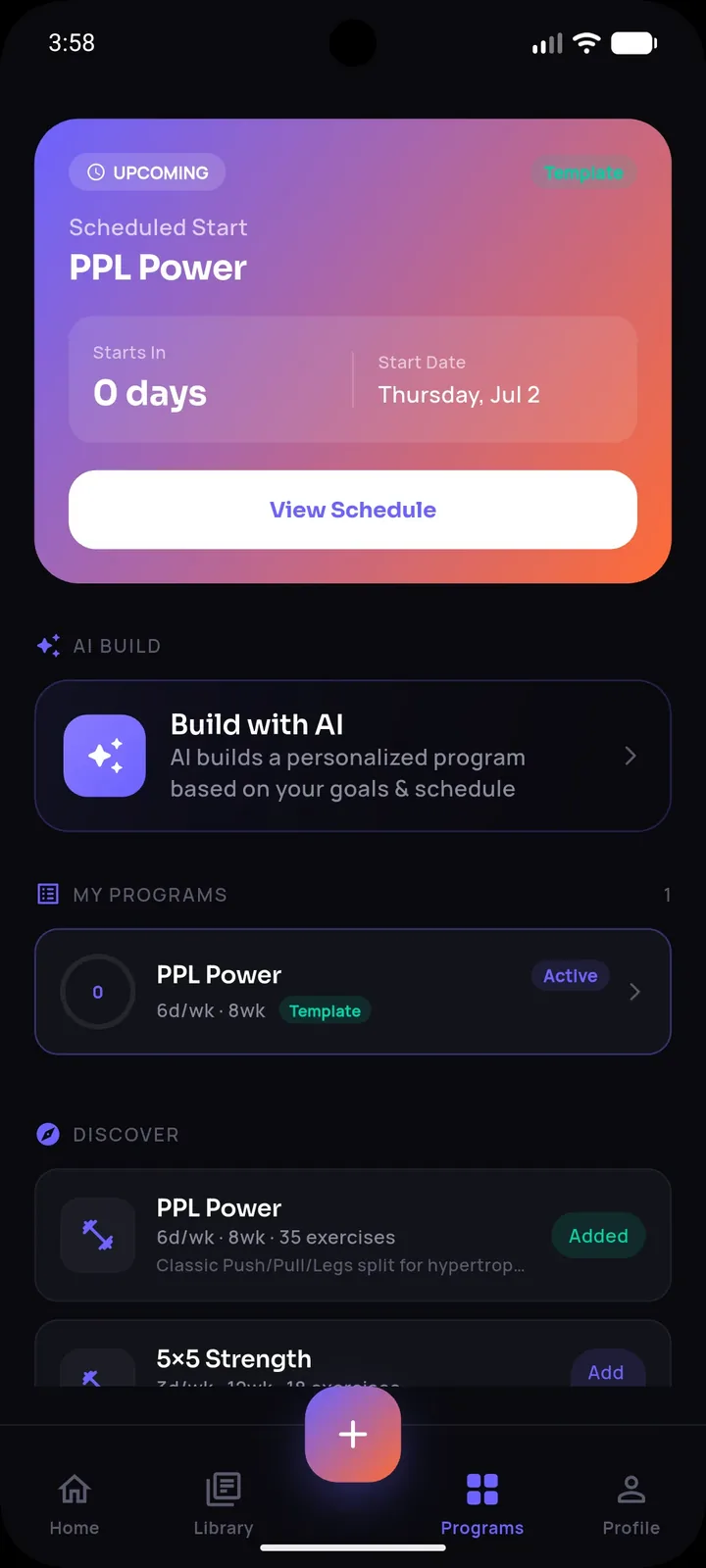
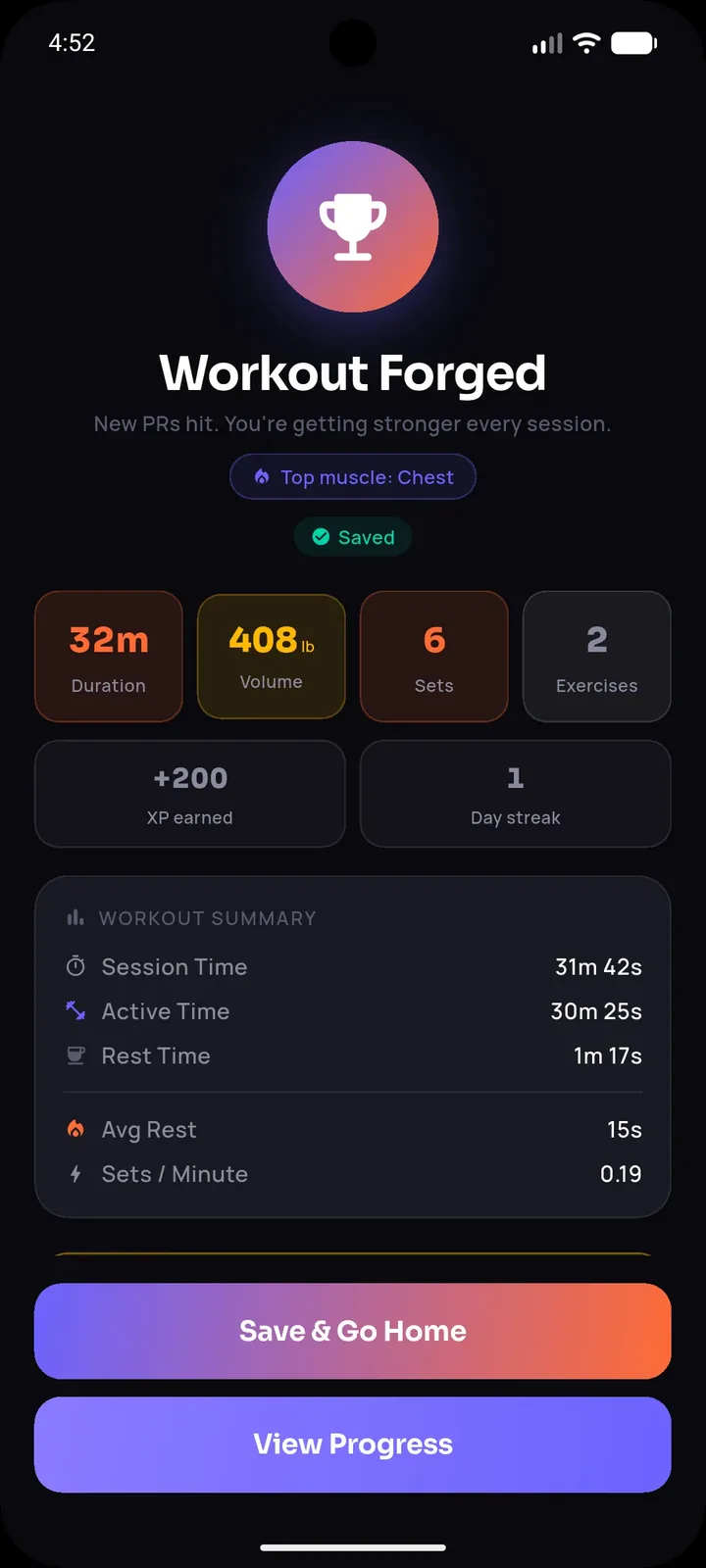
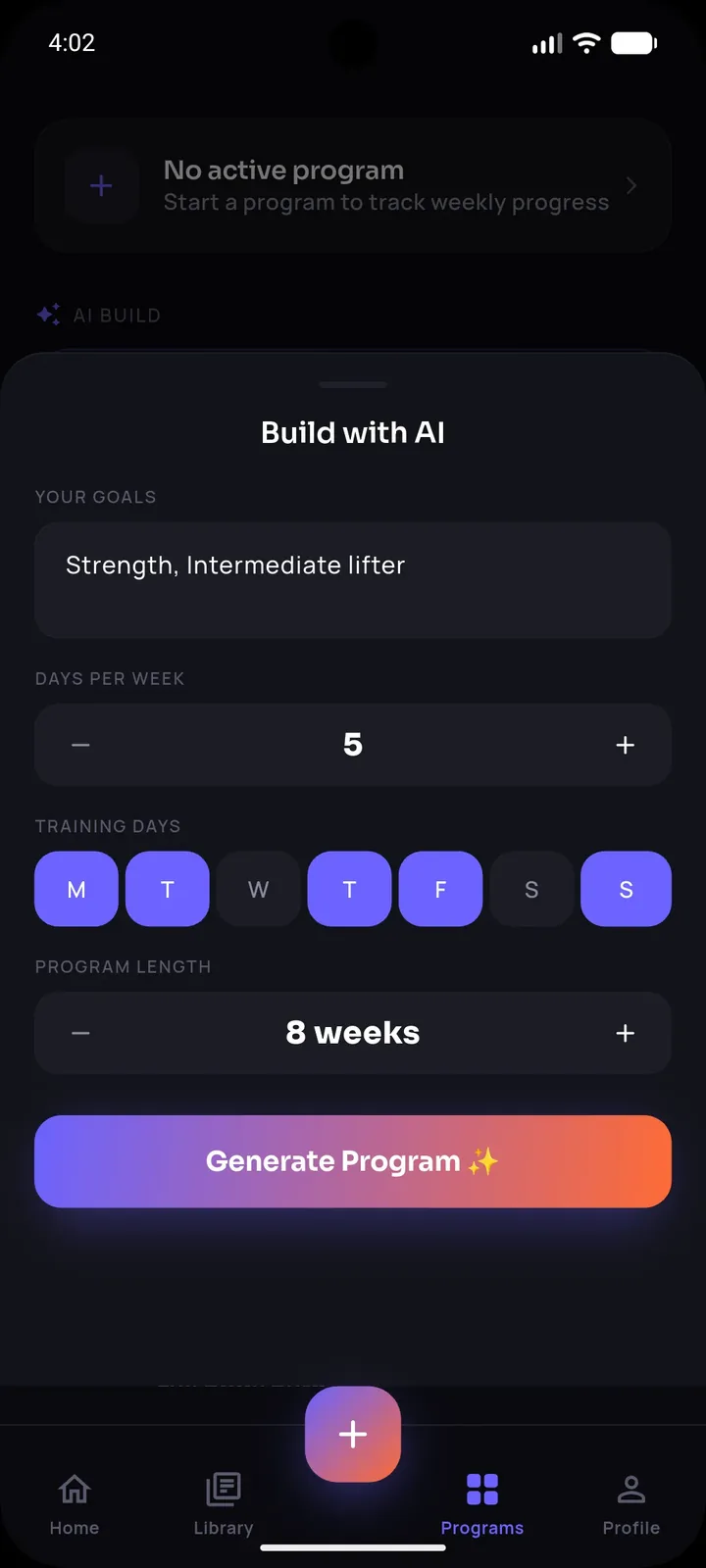
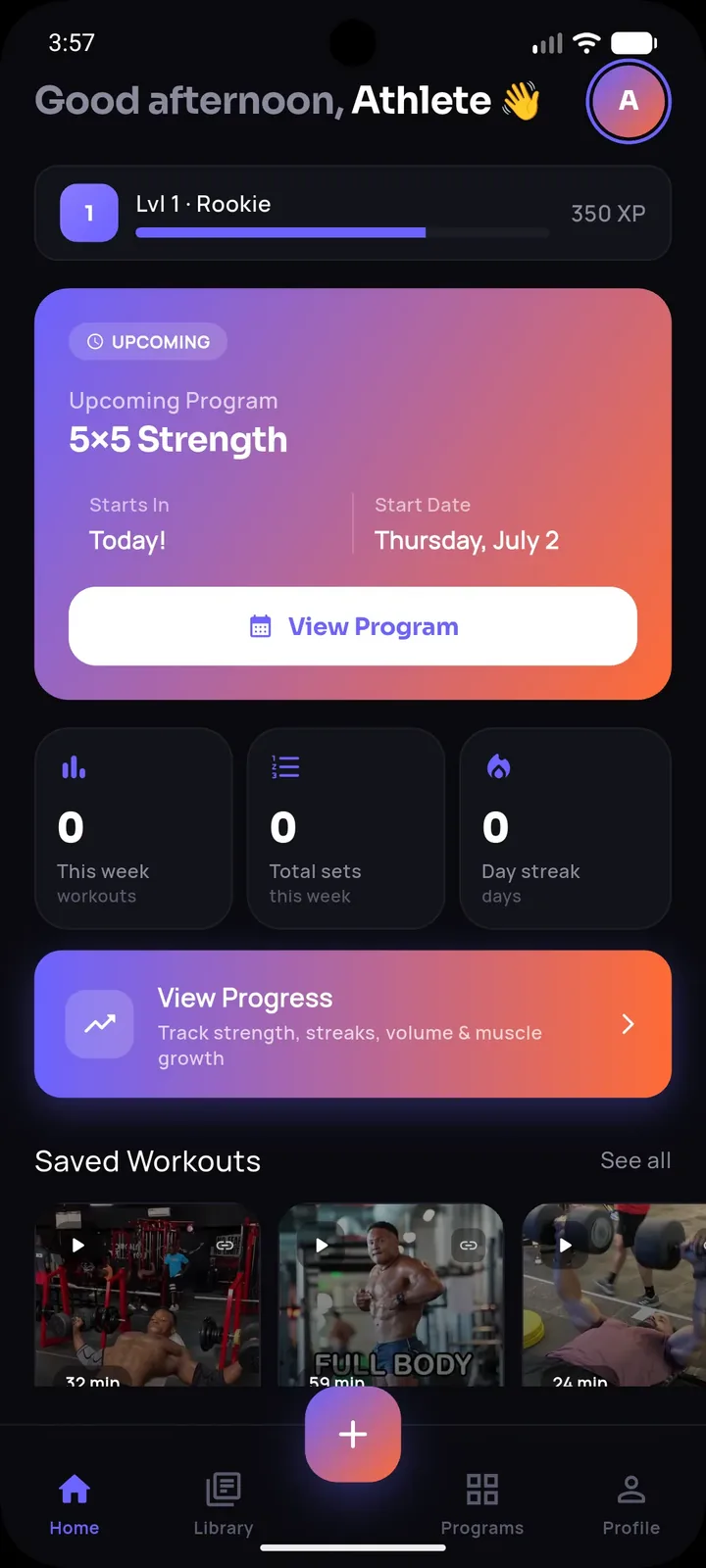
For people who want more structure than a single workout, SetForge's Program Builder lets you set up a full multi-week plan — push/pull/legs, upper/lower, or a fully custom split — and it tracks exactly where you are in the program so you never lose your place. And because everything is logged automatically as you train, SetForge's Progress Analytics shows your training volume, strength progression, and estimated one-rep max over time, so "am I actually getting stronger" stops being a guess.
A Sample Week Using Imported Workouts
Here's what turning your saved-reel backlog into a real week of training could look like:
- Monday — Push: Import a saved chest/shoulders/triceps reel, let AI extract the sets and reps, and log actual weights used.
- Tuesday — Rest or mobility: A saved mobility flow, used at low intensity, no progression tracking needed.
- Wednesday — Pull: A saved back/biceps video, this time aiming to beat last week's numbers using SetForge's previous-performance display.
- Thursday — Rest.
- Friday — Legs: Import a saved leg-day reel, note where the video was vague on rest periods, and set your own based on how you felt.
- Saturday — Full body or a saved "quick 20-minute" reel for an efficient session on a busy day.
- Sunday — Review: Check your weekly volume and 1RM estimates, delete any saved videos you didn't touch, and queue up one new import for next week.
Notice what's different here: every session has a slot, a purpose, and a record — not just a vague intention to "do one of the saved ones."
Frequently Asked Questions
Do I have to delete all my saved workout videos?
No — the goal isn't to throw away your library, it's to convert the ones you'll actually use into a trackable format and stop treating the rest as a to-do list. A quick audit followed by importing your favorites is usually enough.
What if the video doesn't specify sets, reps, or rest time?
This is common with short-form content. When information is missing, fill in reasonable defaults (for example, 3 sets of 10-12 reps with 60-90 seconds rest) and adjust after your first attempt based on how it felt.
How does SetForge's AI actually extract a workout from a video?
You share the Instagram or TikTok video into the app, and SetForge's AI analyzes it to identify the exercises being performed along with any sets, reps, and rest cues shown or spoken in the clip, then builds it into a structured workout automatically.
Can I still build my own workouts instead of importing them?
Yes — SetForge includes a full manual workout builder with a 500+ exercise library filterable by muscle group, so importing videos and building from scratch work side by side.
Is there a limit to how many workouts I can import?
SetForge's free tier supports imports, and SetForge Pro adds unlimited imports along with advanced analytics and priority access to the AI Coach for people who import frequently.
Will this work if I train at home with minimal equipment?
Yes. The same import-and-track process works regardless of equipment — the exercise library is filterable by what you actually have available, so home workouts get organized exactly like gym sessions.
The Bottom Line
A saved folder full of workout reels isn't a training plan — it's a wishlist. The fitness progress you're looking for doesn't come from watching more videos or saving more clips; it comes from turning a handful of good ones into a structured, trackable routine you actually repeat and improve on. Do the one-time work of converting your favorites into real workouts — or let SetForge's AI do the extraction for you — and the backlog that's been quietly stressing you out becomes the foundation of your next few months of real, measurable training.