Almost every fitness app claims to have "hundreds of exercises," but a large count means little if the library isn't structured well enough to actually find and use what you need in the moment. A good exercise library is judged by how quickly it answers a specific question — "what can I do for shoulders with just dumbbells" — not by its total size.
Size Alone Isn't the Point
A library with 2,000 poorly categorized exercises is less useful than one with 500 that are properly tagged, searchable, and filterable. What matters is whether you can actually narrow down to what you need quickly, not how impressive the raw number looks on a marketing page.
The Filters That Actually Matter
- Muscle group — the single most important filter; you almost always know what you're training before you know the specific exercise name
- Equipment available — critical for substitutions when you're missing a specific piece of gear
- Movement pattern — push, pull, hinge, squat — useful for building balanced programs
- Difficulty or experience level — helpful for beginners who don't yet know which exercises are appropriate for their current capability
A library missing muscle group filtering specifically is missing the most commonly needed search dimension.
Why Substitution Support Matters So Much
Real training rarely happens with unlimited equipment access — home setups, busy commercial gyms, and injuries all create situations where the "ideal" exercise for a movement isn't available. A library that clearly maps equivalent exercises within the same muscle group turns "I can't do this exercise" into "here's what I'll do instead" in seconds.
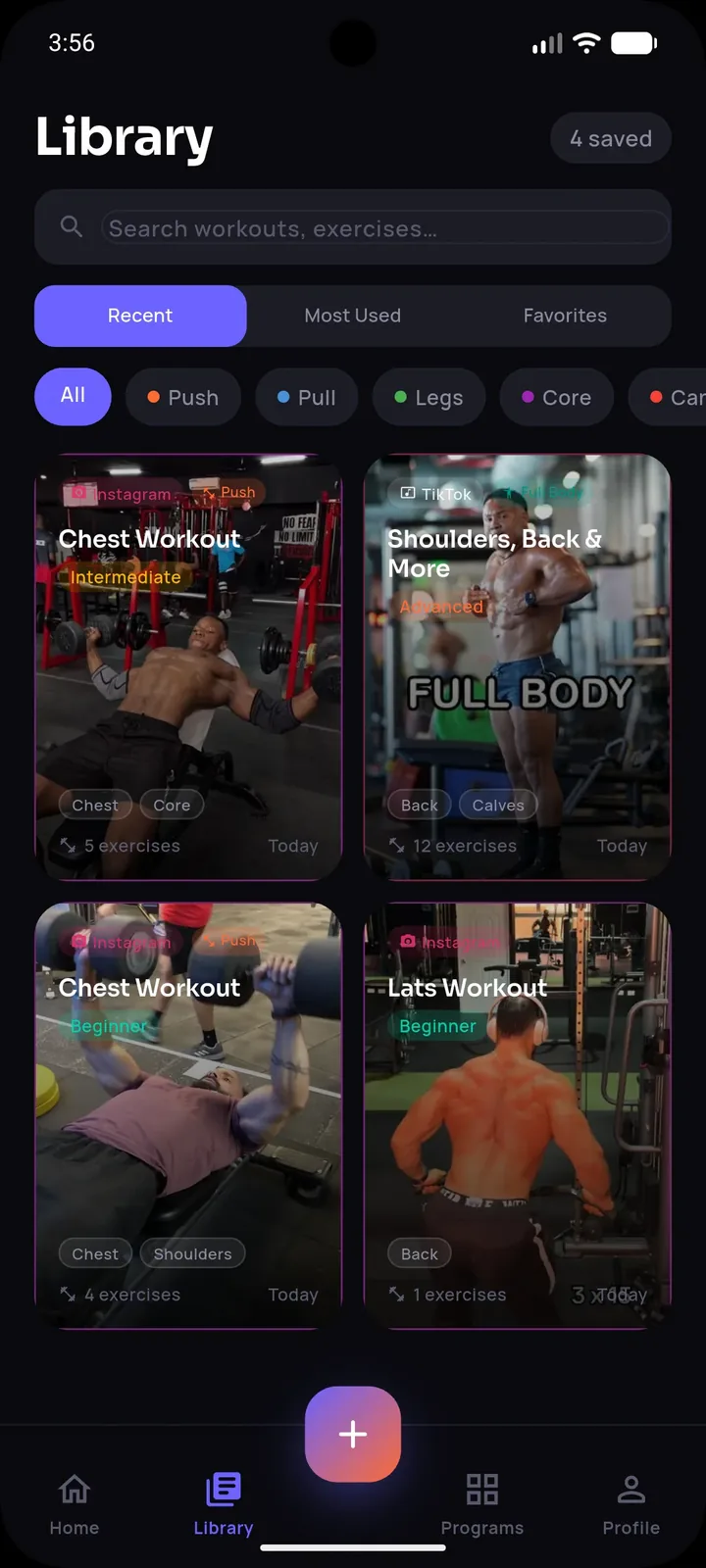
Stop losing workouts in your camera roll.
SetForge turns saved Instagram & TikTok workout videos into structured, trackable training programs — automatically.
How SetForge's Exercise Library Is Structured
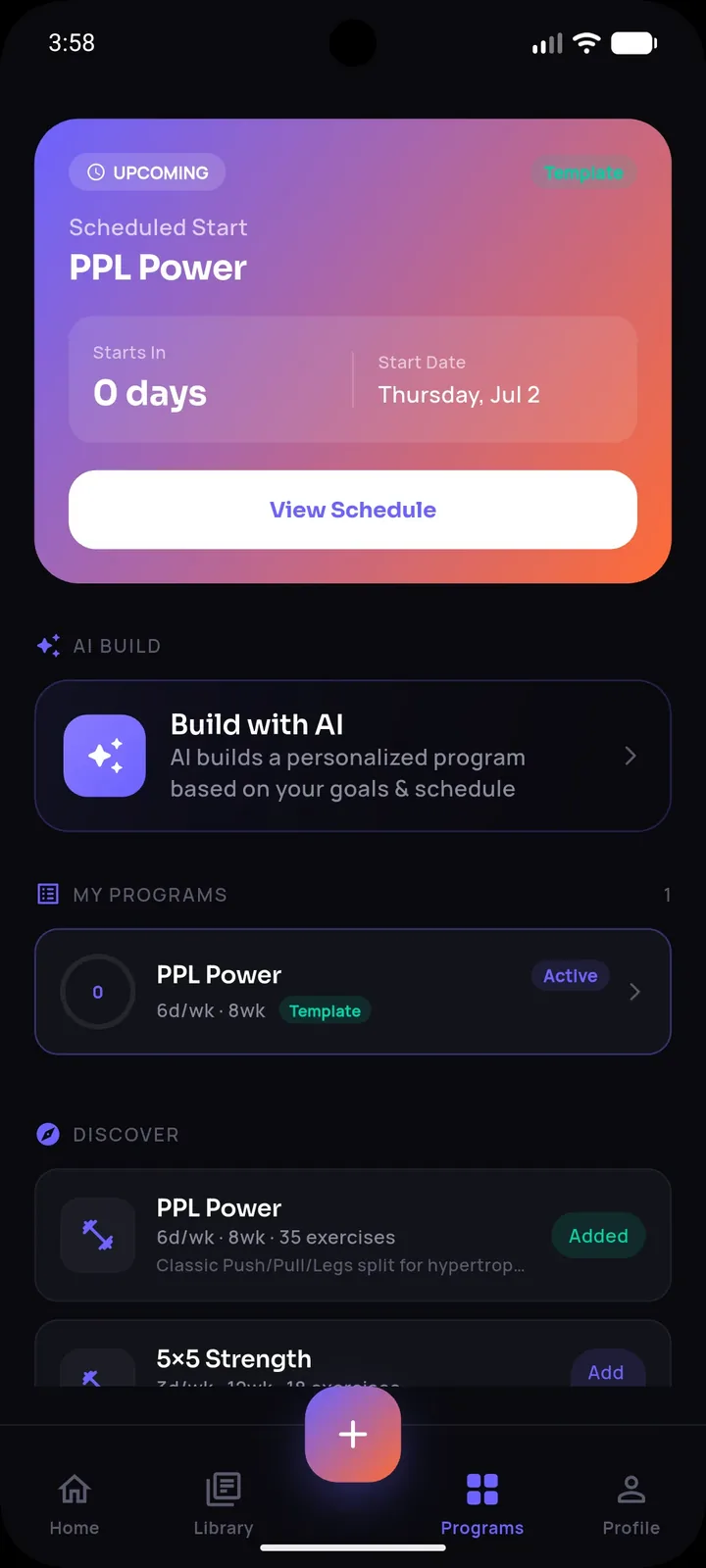
SetForge's exercise library includes 500+ exercises, filterable by muscle group, which is specifically designed around the most common real-world need: finding an appropriate movement or substitution fast, whether you're building a workout from scratch or swapping out an exercise from an imported video that assumed equipment you don't have. Every exercise imported via SetForge's AI from a saved video is matched against this same library, so extracted workouts are searchable and substitutable in exactly the same way as manually built ones.
How to Actually Evaluate a Library Before Committing to an App
- Search for a specific muscle group and see how quickly you get a relevant, filtered list.
- Try finding a substitution for a common exercise you don't have equipment for.
- Check whether imported workouts (from video) map correctly to the same library, or exist as separate, unsearchable entries.
The Downside of a Library That's Too Big Without Structure
Some apps advertise huge exercise counts padded with redundant or overly niche variations that add little practical value. If searching for "chest" returns 80 barely-differentiated results with no further filtering, the size becomes a liability rather than an asset — you spend more time scrolling than you would with a smaller, better-organized library.
Frequently Asked Questions
Does a bigger exercise library always mean a better app?
No — how well the library is filtered and organized matters more than raw exercise count for actual day-to-day usability.
How many exercises does SetForge's library include?
SetForge includes a library of 500+ exercises, filterable by muscle group, covering both manual workout building and substitutions for imported workouts.
Can I find a substitution if I don't have the equipment shown in an imported video?
Yes — because imported exercises are matched against SetForge's full library, you can filter by muscle group to find an equivalent movement you can actually perform.
What's the most important filter an exercise library should have?
Muscle group filtering is generally the most commonly needed, since most training decisions start with "what am I training today" rather than a specific exercise name.
Should I care about equipment filtering if I only train at a commercial gym?
It's still useful for days machines are occupied or if you occasionally train elsewhere, but it matters most for home gym users with more limited equipment.
The Bottom Line
A genuinely good exercise library is judged by how fast it answers "what can I do for this muscle group with what I have available" — not by how large the total count is. Muscle-group filtering and reliable substitution support are what actually make a library useful during real training, not just impressive on a features list.