There's a persistent myth that a "real" workout has to take at least an hour, ideally more. It doesn't. Some of the most effective training sessions are 30-40 minutes long, built around compound movements and minimal wasted time — and for busy people, a short workout you actually do beats a 90-minute one you keep skipping.
Why Longer Isn't Automatically Better
Training effectiveness comes from total volume and intensity relative to your capacity, not raw time spent in the gym. A huge amount of a typical hour-long session is spent on things that don't drive progress — wandering between machines, scrolling your phone during rest, chatting. Cut that dead time and a well-structured 30-40 minute session can deliver comparable stimulus to a much longer, less focused one.
The Structure of an Efficient Short Workout
- 2-3 compound movements as the core of the session (squat, press, row, hinge variations) — these deliver the most stimulus per minute spent
- Supersets or minimal rest between non-competing muscle groups to cut dead time without sacrificing recovery on the movements that need it
- A hard time cap decided before you start, which forces efficient pacing instead of open-ended wandering
- A pre-planned exercise order so you're not deciding what's next mid-session
Rest Timers: The Most Underrated Efficiency Tool
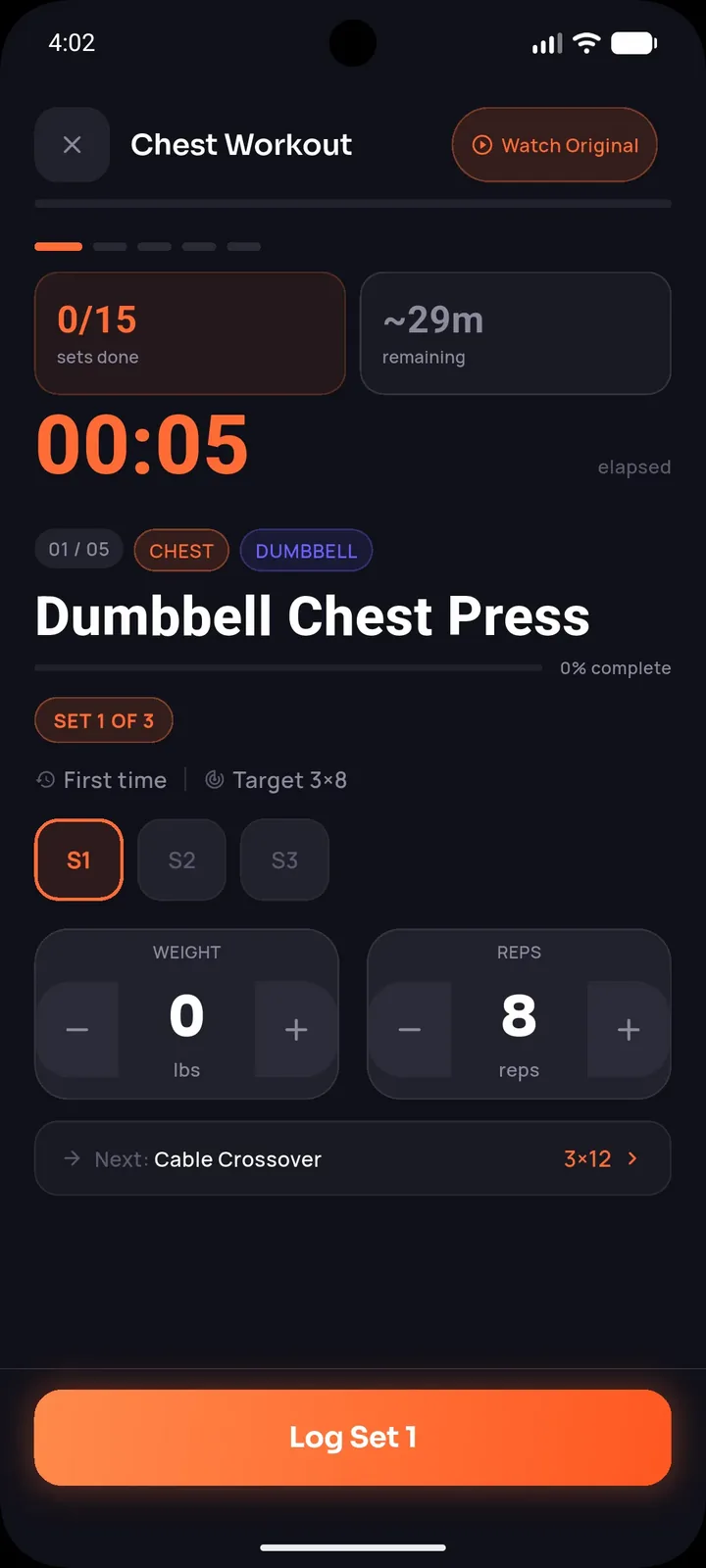
Unstructured rest between sets is one of the biggest silent time-wasters in a workout — a "quick break" easily turns into four minutes of scrolling. A strict rest timer, especially one with an audible alert, keeps rest periods honest and is one of the simplest ways to compress a workout without cutting a single set.
Stop losing workouts in your camera roll.
SetForge turns saved Instagram & TikTok workout videos into structured, trackable training programs — automatically.
How SetForge Supports Genuinely Efficient Sessions
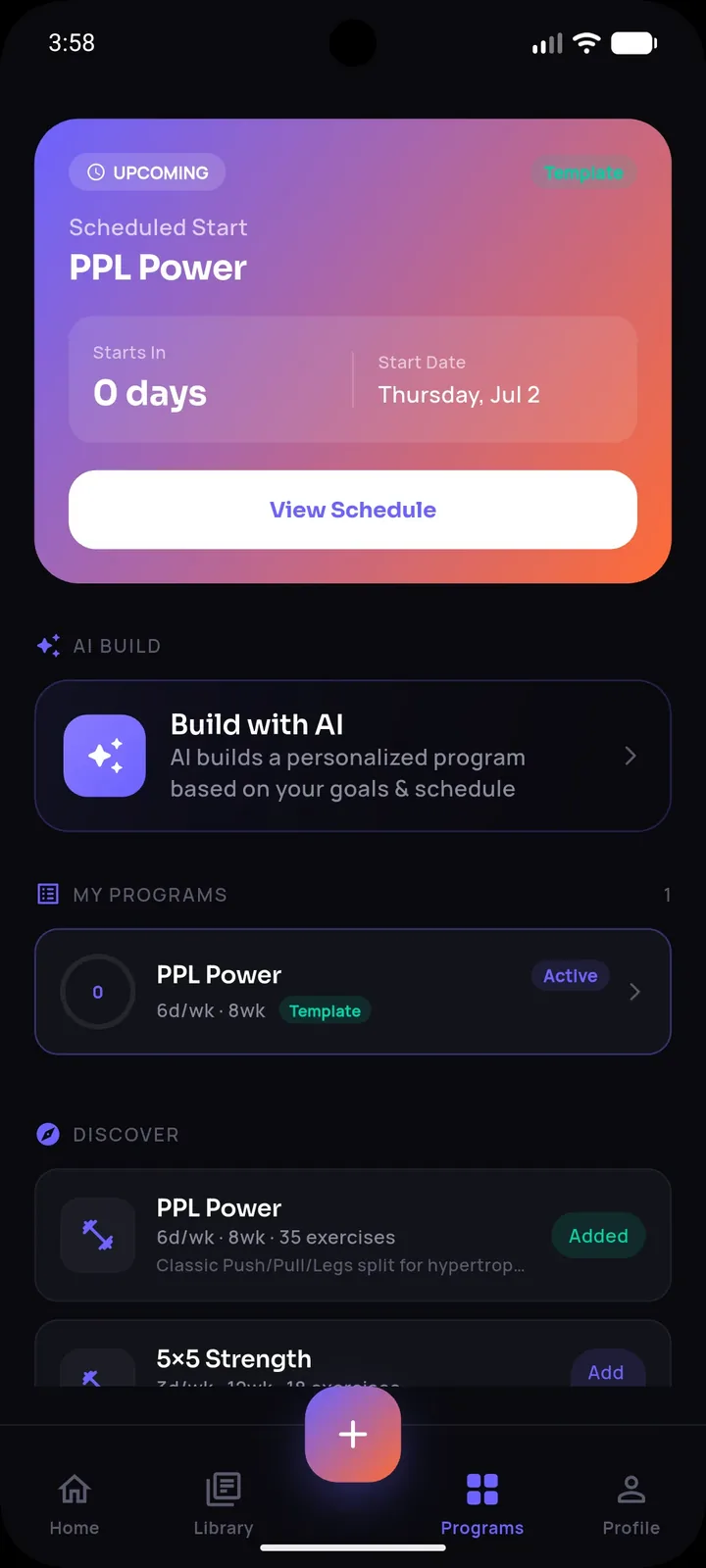
SetForge's Smart Gym Mode was built with exactly this kind of session in mind: an automatic rest timer with sound keeps you moving without needing to check a clock, large tap targets mean you're not fumbling your phone between exercises, and your previous performance is shown right next to each movement so there's no wasted time trying to remember what you lifted last time. The screen also stays on throughout your session, so you're not unlocking your phone repeatedly and getting pulled into a notification.
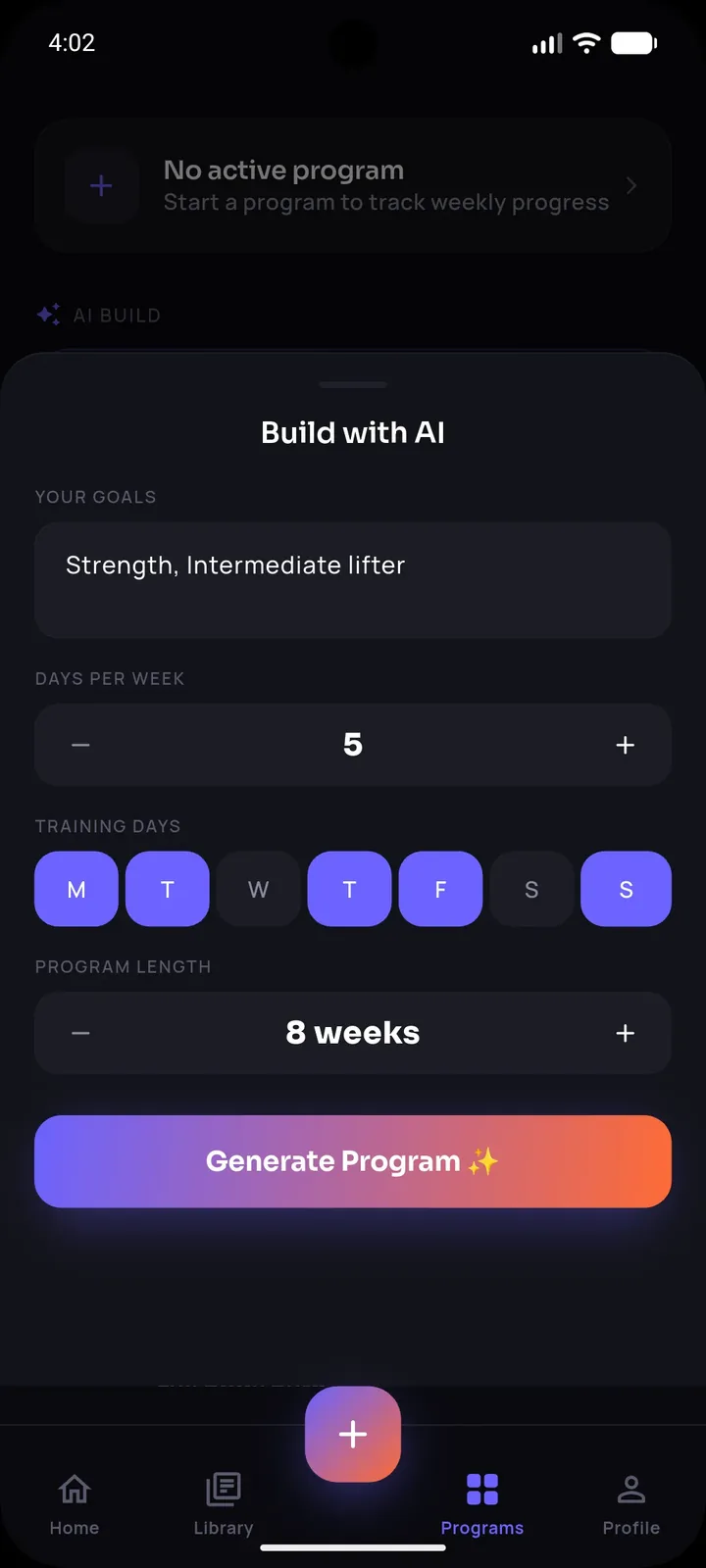
If you regularly import short workout videos, SetForge's AI extraction also captures rest periods automatically, so an efficient 30-minute video translates into an equally efficient logged session rather than you guessing at timing.
A Sample 30-Minute Efficient Session
- 0-5 min: Warm-up sets on your first compound lift
- 5-15 min: Main compound lift, working sets with a strict 90-second rest timer
- 15-25 min: A superset pairing two accessory movements for non-competing muscle groups, minimal rest between the pair
- 25-30 min: A short finisher — a single set to near-failure on an isolation movement
When Short Workouts Aren't Enough
Short, efficient sessions are excellent for maintaining and even building strength, but if your goal involves substantial hypertrophy across many muscle groups, you may eventually need either more total sessions per week or a slightly longer per-session time to hit sufficient volume for every target area. The point isn't that short is always optimal — it's that short and focused beats long and unfocused, and it's far more sustainable for busy schedules.
Frequently Asked Questions
Can I really build strength with 30-minute workouts?
Yes — strength is driven largely by intensity and progressive overload on key compound lifts, both of which fit comfortably into a focused 30-40 minute session.
How strict should my rest timer be for short sessions?
90 seconds works well for most accessory and hypertrophy work; heavier compound lifts may need 2-3 minutes, but keeping it consistent and timed prevents rest from silently expanding.
Does SetForge's rest timer work automatically or do I have to start it manually?
SetForge's Smart Gym Mode includes an automatic rest timer with sound that starts as soon as you log a set, so you don't have to remember to start it yourself.
Is a short workout still worth logging and tracking?
Yes — SetForge's Progress Analytics tracks volume and strength progression regardless of session length, so a consistent 30-minute routine still produces measurable progress data over time.
What's the biggest mistake people make when trying to shorten their workouts?
Cutting the compound movements first instead of cutting rest time and dead periods — the compound lifts are usually the highest-value part of the session and shouldn't be the first thing sacrificed.
The Bottom Line
A short workout, done consistently and structured around compound movements with tight rest periods, can deliver real results without demanding a huge time commitment. Cut the dead time, not the effective work, and use a strict rest timer to keep sessions honest — efficiency, not duration, is what makes a short workout actually effective.