Ask ten people at the gym what progressive overload means and you'll get ten slightly different, often vague answers — "lifting heavier," mostly. That's part of it, but progressive overload is a broader principle than just adding plates, and misunderstanding it is one of the most common reasons people train consistently for months without visible progress.
What Progressive Overload Actually Means
Progressive overload is the gradual increase of stress placed on your body during training, forcing it to adapt over time. That stress can increase in more ways than just weight on the bar:
- More weight — the most obvious form, adding load to a lift
- More reps at the same weight
- More sets, increasing total volume
- Better technique, allowing more effective force production through a fuller range of motion
- Less rest between sets, increasing density and metabolic stress
- Slower tempo, increasing time under tension per rep
A program that only ever chases "add more weight" every single week will eventually stall — the other variables give you room to keep progressing even when adding weight isn't realistic that week.
Why This Matters More Than Any Specific Program
You can follow the "best" program on the internet and still not progress if you're not applying overload consistently within it. Conversely, a mediocre program applied with genuine progressive overload will usually outperform a perfect program applied without it. The principle is more important than the specific exercise selection.
How to Apply It Without Guessing
Progressive overload requires knowing exactly what you did last time — without a logged record, "progress" becomes a feeling rather than a fact, and it's easy to unconsciously repeat the same numbers indefinitely while believing you're pushing yourself.
Stop losing workouts in your camera roll.
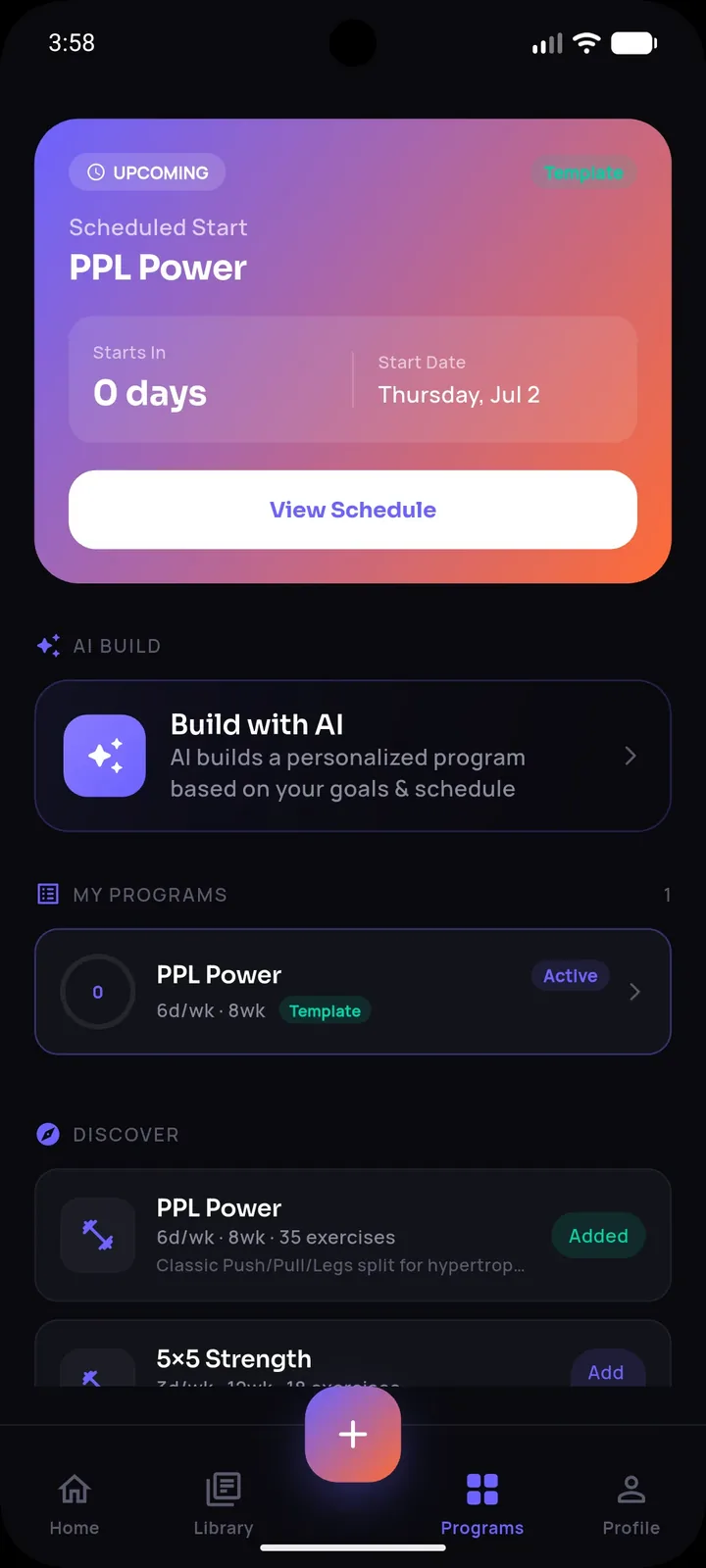
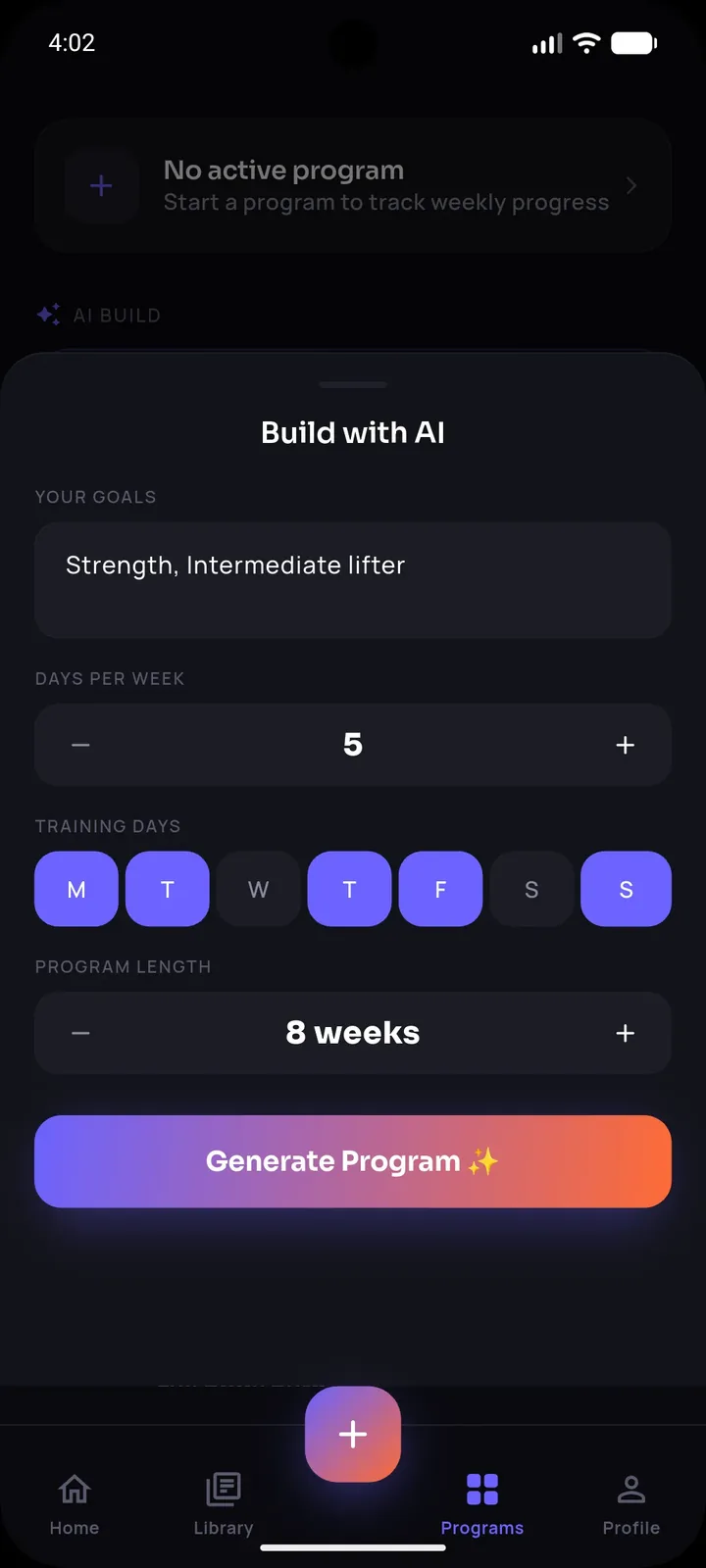
SetForge turns saved Instagram & TikTok workout videos into structured, trackable training programs — automatically.
How SetForge Makes Progressive Overload Concrete
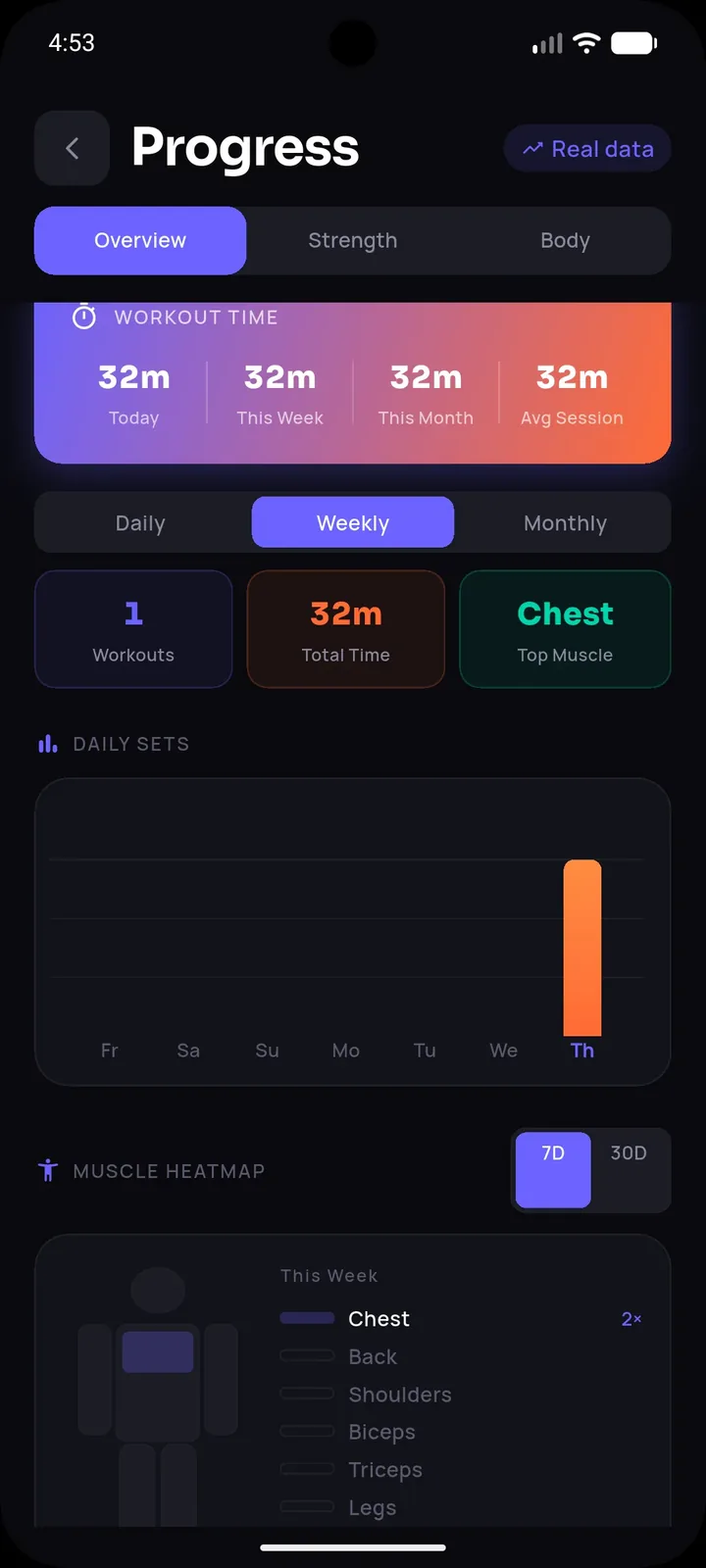
SetForge's Smart Gym Mode shows your previous performance for each exercise directly during your session, so the decision to add weight, reps, or an extra set is based on an actual number in front of you, not a guess or a memory. Its Progress Analytics then tracks training volume and strength progression over time, along with an estimated one-rep max per lift — turning the abstract concept of "getting stronger" into a visible, trackable trend line.
For anyone importing workouts from saved videos, this matters just as much: an imported workout gets logged the same way as a manually built one, so progressive overload tracking applies regardless of where the workout originally came from.
A Simple Weekly Overload Framework
- Week 1: Establish a baseline — log your actual working weights and reps honestly.
- Week 2: Add one rep to at least one set per exercise, or a small amount of weight if reps are already at the top of your target range.
- Week 3: Continue the trend; if a lift stalls, try an extra set instead of forcing more weight.
- Week 4: A lighter "deload" week if fatigue is building, before resuming the progression.
Common Progressive Overload Mistakes
- Adding weight every session regardless of form — sacrificing range of motion or technique to hit a number defeats the purpose
- Not logging workouts, making it impossible to know what "progress" would even look like
- Ignoring non-weight forms of overload when a lift genuinely plateaus on load alone
- Never deloading, leading to burnout or injury from constantly pushing every single week
Frequently Asked Questions
Do I need to add weight every single workout?
No — progressive overload can come from more reps, more sets, better technique, or reduced rest, not just heavier weight every session.
How does SetForge help me apply progressive overload correctly?
Smart Gym Mode shows your previous performance per exercise during your session, and Progress Analytics tracks volume, strength progression, and estimated 1RM over time.
What should I do if a lift hasn't improved in weeks?
Try an extra set or slightly more reps at the same weight before assuming you need a heavier load, and consider a deload week if fatigue seems to be the issue.
Does progressive overload apply to imported workouts too?
Yes — any workout you log in SetForge, whether imported from a video or built manually, feeds into the same progress tracking.
Is progressive overload equally important for beginners and advanced lifters?
Yes, though beginners typically progress faster and more linearly, while advanced lifters need to rely more on varied forms of overload since weight increases come more slowly.
The Bottom Line
Progressive overload is the actual mechanism behind getting stronger, and it's broader than just adding weight to the bar — reps, sets, technique, and rest all count. Logging your training consistently is what makes overload possible to apply deliberately instead of by accident, and it's the difference between training for months and training productively for months.