Workouts are almost always the most "movable" thing on a busy person's schedule — a meeting runs long, a friend needs a favor, you're tired, and the workout is what gets quietly dropped, because it's the one commitment that only affects you. That's precisely why it needs to be treated with more scheduling weight than it naturally gets, not less.
Why Workouts Lose to Everything Else
Most competing demands on your time come with external accountability — a boss expecting a deadline, a friend expecting a reply, a family member expecting help. A workout's only accountability is internal, and internal commitments are the easiest ones to renegotiate with yourself in the moment. Fixing this requires either creating external accountability or treating the internal commitment with the same rigidity as an external one.
Scheduling Tactics That Actually Work
- Fixed time blocks, not "sometime today" — a workout scheduled for 7am is far more likely to happen than one vaguely planned for "this evening"
- Treat it like an unmovable meeting — literally block it on your calendar the same way you'd block an important call
- Pre-decide the workout the night before — decision fatigue in the moment is a major reason people skip; knowing exactly what you're doing removes that friction
- Attach it to an existing habit — right after you drop kids at school, right before lunch — anchoring reduces the chance of it sliding
- Build in a minimum viable version — a 15-minute fallback session for days that go sideways, so "no time for the full workout" doesn't become "no workout at all"
Stop losing workouts in your camera roll.
SetForge turns saved Instagram & TikTok workout videos into structured, trackable training programs — automatically.
Why Pre-Deciding the Workout Matters So Much
One of the biggest hidden reasons workouts get skipped isn't lack of time — it's the mental cost of deciding what to do in the moment, on top of an already tiring day. If opening your workout means facing a decision (what exercises, how many sets, which video to search for), that friction alone is often enough to talk yourself out of starting. Removing that decision in advance is one of the highest-leverage changes you can make.
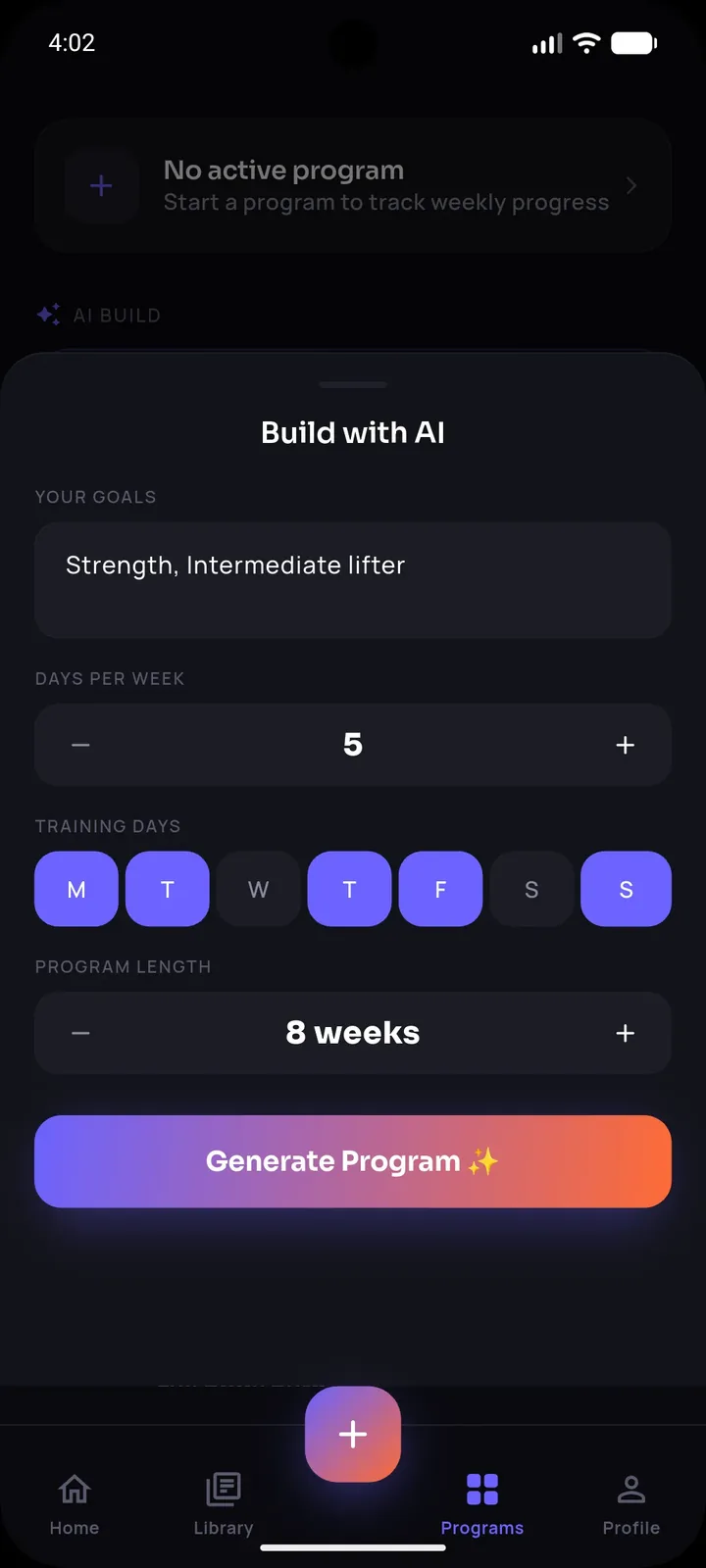
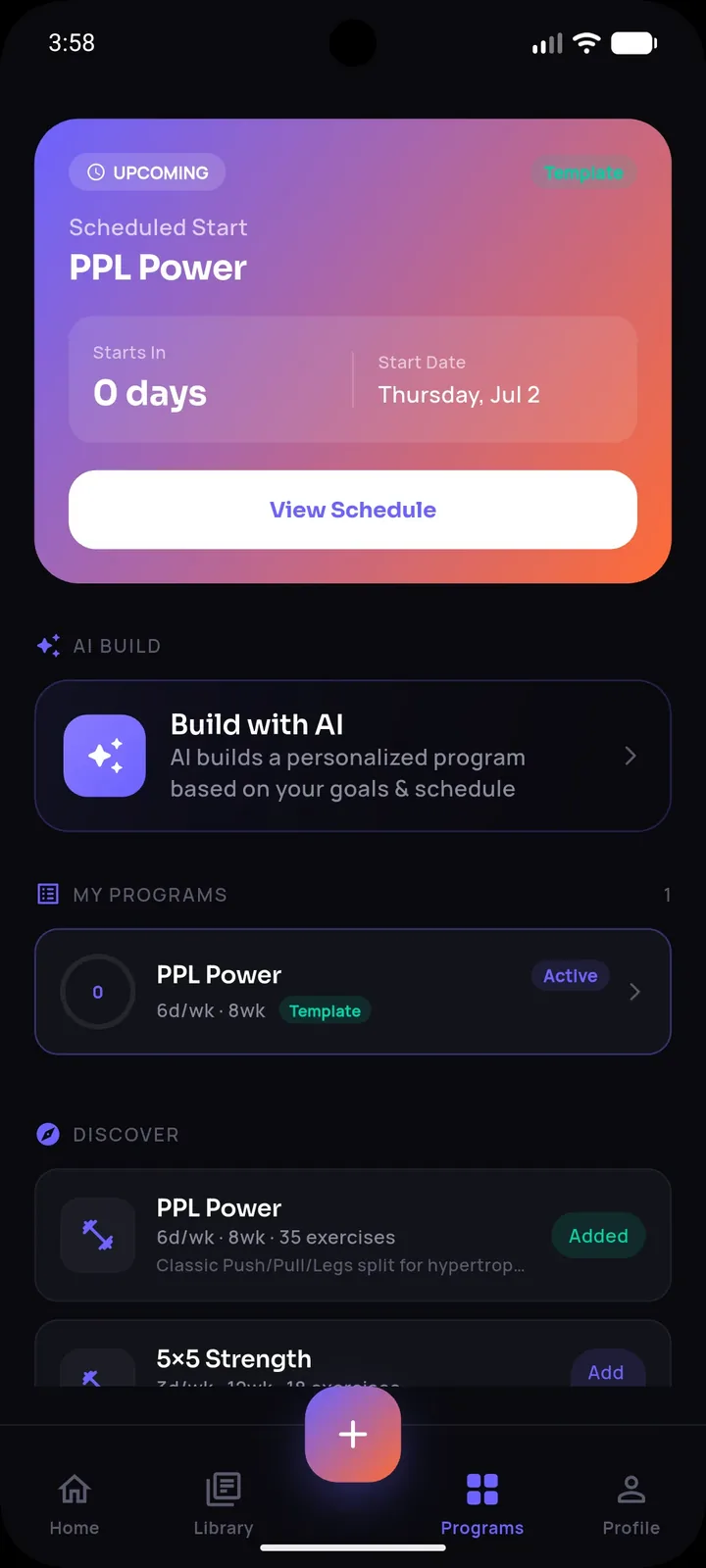
SetForge's Program Builder addresses this directly — a structured multi-week program means today's session is already decided before you even open the app, and it tracks exactly where you are in the program so there's no ambiguity about what comes next. Combined with imported or manually built workouts already sitting in your history, there's no in-the-moment decision left to make except starting.
Making Fitness Non-Negotiable Without Burning Out
"Non-negotiable" doesn't mean rigid to the point of guilt — it means the default answer is yes, with a pre-planned fallback for genuinely bad days rather than an all-or-nothing standard that leads to giving up entirely after one missed session. A short 15-minute fallback workout, decided in advance, protects the habit on the days a full session isn't realistic.
Tracking Consistency, Not Just Individual Sessions
Prioritizing workouts is easier to sustain when you can see the pattern, not just today's single decision. SetForge's achievements and streak tracking give a visible, motivating record of consistency over time — a concrete reminder of the non-negotiable habit you're actually building, beyond any single day's willpower.
Frequently Asked Questions
What if something urgent genuinely conflicts with my scheduled workout time?
Use your pre-decided fallback (a shorter session) rather than skipping entirely — protecting the habit matters more on hard days than hitting a full session every time.
Does having a program really make a difference versus deciding day-of?
Yes — removing the in-the-moment decision of what to do is one of the most effective ways to reduce the friction that leads to skipped sessions.
How does SetForge help me stick to a schedule?
Its Program Builder sets up a structured multi-week plan and tracks your position in it, so each day's workout is already decided, and streak/achievement tracking gives visible feedback on your consistency.
Should I schedule workouts at the same time every day?
Consistency in timing (same time each day, or same days each week) tends to build the habit faster than a constantly shifting schedule, though it's not strictly required.
Is it bad to have a "minimum viable" fallback workout?
No — a short fallback session protects your consistency streak on hard days and is far better than an all-or-nothing standard that leads to skipping entirely.
The Bottom Line
Workouts lose to competing demands because they're the easiest commitment to renegotiate with yourself. Fixed time blocks, pre-decided sessions, and a realistic fallback for hard days turn "I'll try to fit it in" into an actual non-negotiable part of your week — and a structured program removes the daily decision-making that quietly sabotages consistency.