Progress photos are one of the most underused tools in fitness tracking, largely because most people take them inconsistently — different lighting, different poses, different times of day — which makes any two photos nearly impossible to meaningfully compare. Done consistently, though, they reveal physical changes that numbers alone often miss.
Why Photos Capture What Numbers Can Miss
Body weight and even circumference measurements can't fully capture posture changes, muscle definition, or overall shape shifts that happen gradually over months. A photo comparison often reveals visible improvement well before or even without a dramatic change on the scale — particularly for body recomposition (simultaneous fat loss and muscle gain).
The Rules for Photos That Are Actually Comparable
- Same lighting — ideally natural light at the same time of day, avoiding harsh overhead lighting that changes how shadows fall
- Same poses — front, side, and back, in the same order every time
- Same clothing (or lack thereof) — baggy clothes hide changes that fitted clothing or minimal clothing reveals clearly
- Same distance and angle — use a fixed spot if possible, so framing stays consistent
- Same frequency — every 2-4 weeks tends to work well; daily photos show too little change to be meaningful
Comparing Photos Without Overreacting
A single photo comparison — especially only a few weeks apart — often looks disappointingly similar, and it's easy to conclude nothing is working. The real value shows up comparing photos 2-3 months apart, where accumulated change becomes far more visible than it is week to week.
Stop losing workouts in your camera roll.
SetForge turns saved Instagram & TikTok workout videos into structured, trackable training programs — automatically.
How SetForge Handles Progress Photos
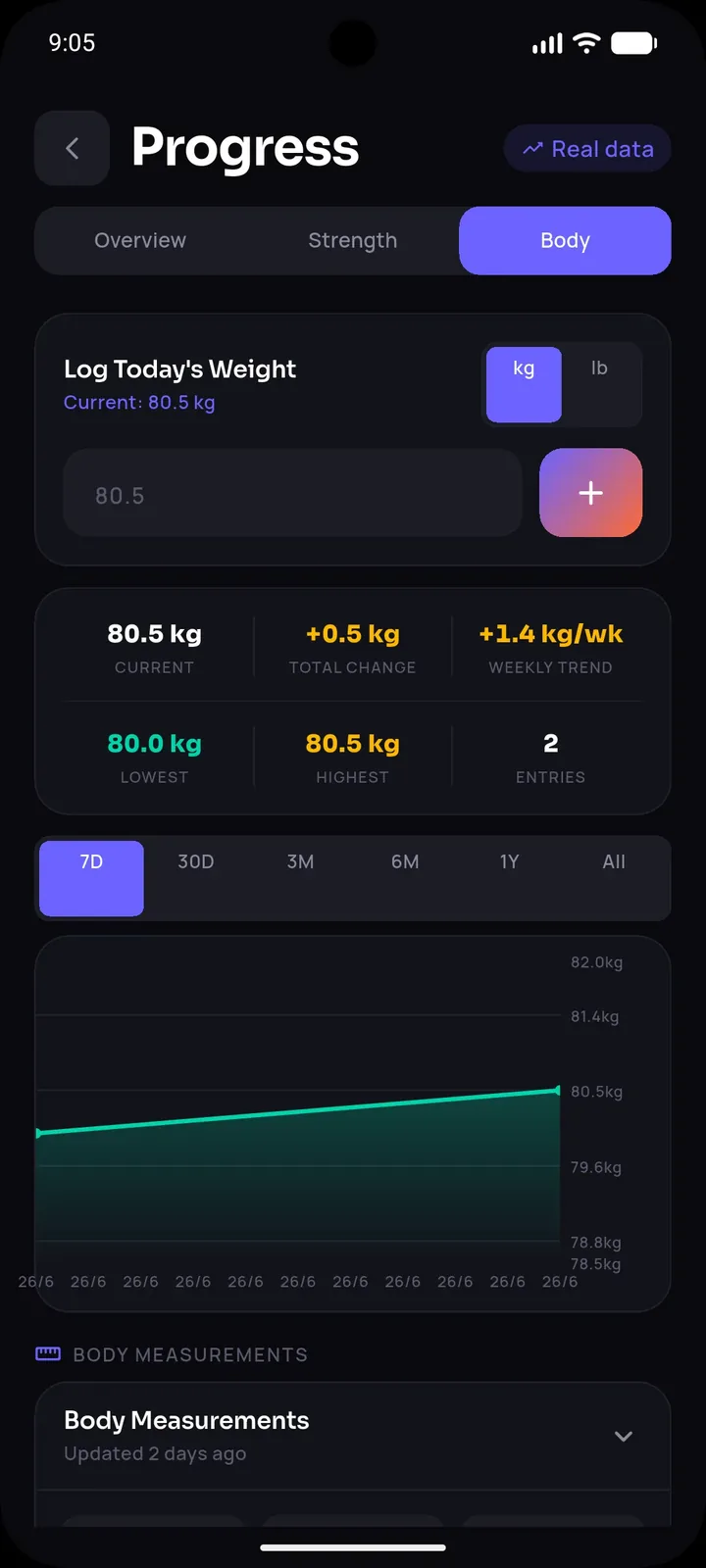
SetForge supports progress photos as part of its Progress Analytics suite, with photos stored on-device rather than uploaded to a shared or public location — keeping this personal record private and under your control. Pairing consistent progress photos with SetForge's body measurement tracking and training data gives a fuller picture than any single metric alone, letting you connect a specific training block to the visible or measurable change that followed it.
What to Do If Photos Show Discouraging Results
If a comparison genuinely shows no change over a few months, it's worth honestly reviewing your actual training consistency, nutrition, and recovery rather than assuming photos are the wrong tool. Cross-checking against your logged training volume and measurements (rather than just the photos alone) helps distinguish "the tool didn't work" from "the underlying training or nutrition needs adjusting."
A Simple Progress Photo Routine
- Pick a consistent spot with good natural lighting.
- Take front, side, and back photos on the same day each month.
- Store them chronologically so a multi-month comparison is easy to pull up later.
- Compare against photos from 2-3 months prior, not the previous session, for a meaningful read on change.
Frequently Asked Questions
How often should I take progress photos?
Every 2-4 weeks is a reasonable frequency — daily or weekly photos usually show too little change to be a meaningful comparison.
Are progress photos stored privately in SetForge?
Yes — progress photos in SetForge are stored on-device rather than uploaded to a shared location.
Why don't my progress photos look different after a few weeks?
Meaningful visible change usually takes longer to show up clearly — comparing photos 2-3 months apart tends to reveal much more than a week-to-week comparison.
Should I combine progress photos with other tracking methods?
Yes — pairing photos with body measurements and training data gives a more complete picture than relying on any single metric alone.
What's the biggest mistake people make with progress photos?
Inconsistent lighting, poses, or timing, which makes photos hard to meaningfully compare even when real physical change has happened.
The Bottom Line
Progress photos are genuinely valuable, but only when taken consistently — same lighting, poses, and timing — and compared across a long enough gap to actually reveal change. Paired with body measurements and training data, they complete a picture the scale alone never could.