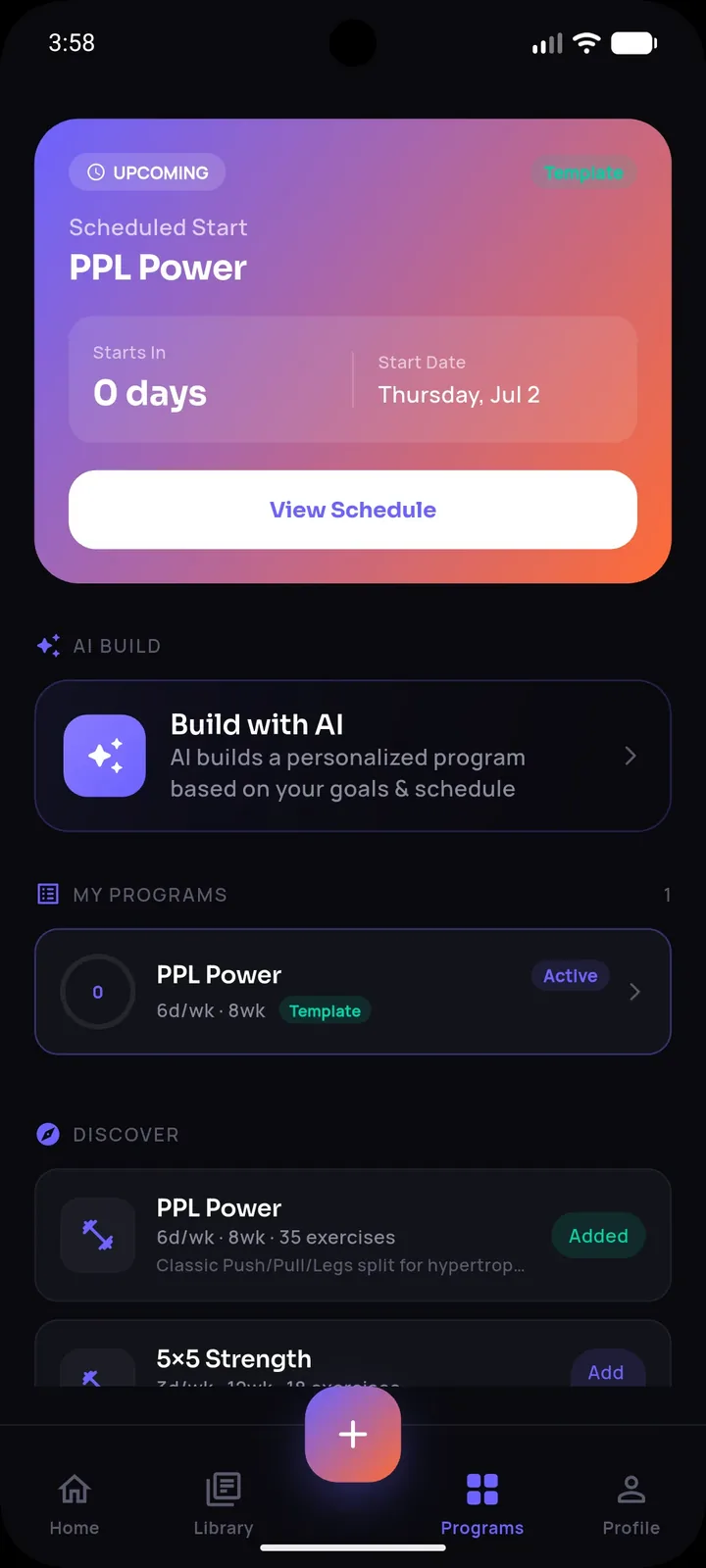
Body weight is the most commonly tracked fitness metric and also one of the most misleading on its own — it can't distinguish between fat loss and muscle gain, doesn't account for water retention, and can stay flat for weeks while your body composition is genuinely changing underneath it. Body measurements fill in a lot of what the scale can't tell you.
Why the Scale Alone Isn't Enough
Someone who loses fat while gaining muscle can see almost no change on the scale despite a visibly and measurably different physique. Relying on weight alone in this situation looks like "no progress" when real, meaningful change is actually happening — which is discouraging enough to make people quit a program that's actually working.
What to Measure and How Often
- Waist (at the navel) — one of the most useful indicators of fat loss
- Chest, arms, thighs — useful for tracking muscle gain or overall size changes
- Hips — relevant for overall body composition tracking
- Frequency: Every 2-4 weeks is generally enough — measuring daily introduces too much noise from normal fluctuation to be useful
Consistency in method matters more than frequency — measure at the same time of day, same conditions (ideally first thing in the morning), and the same specific spot each time.
Combining Measurements With Progress Photos
Numbers tell part of the story, but photos capture visual changes that a tape measure might miss — posture, muscle definition, and overall shape. Taken consistently (same lighting, same poses, same frequency as your measurements), photos and measurements together give a far more complete picture than either alone.
Stop losing workouts in your camera roll.
SetForge turns saved Instagram & TikTok workout videos into structured, trackable training programs — automatically.
How SetForge Tracks This Alongside Your Training
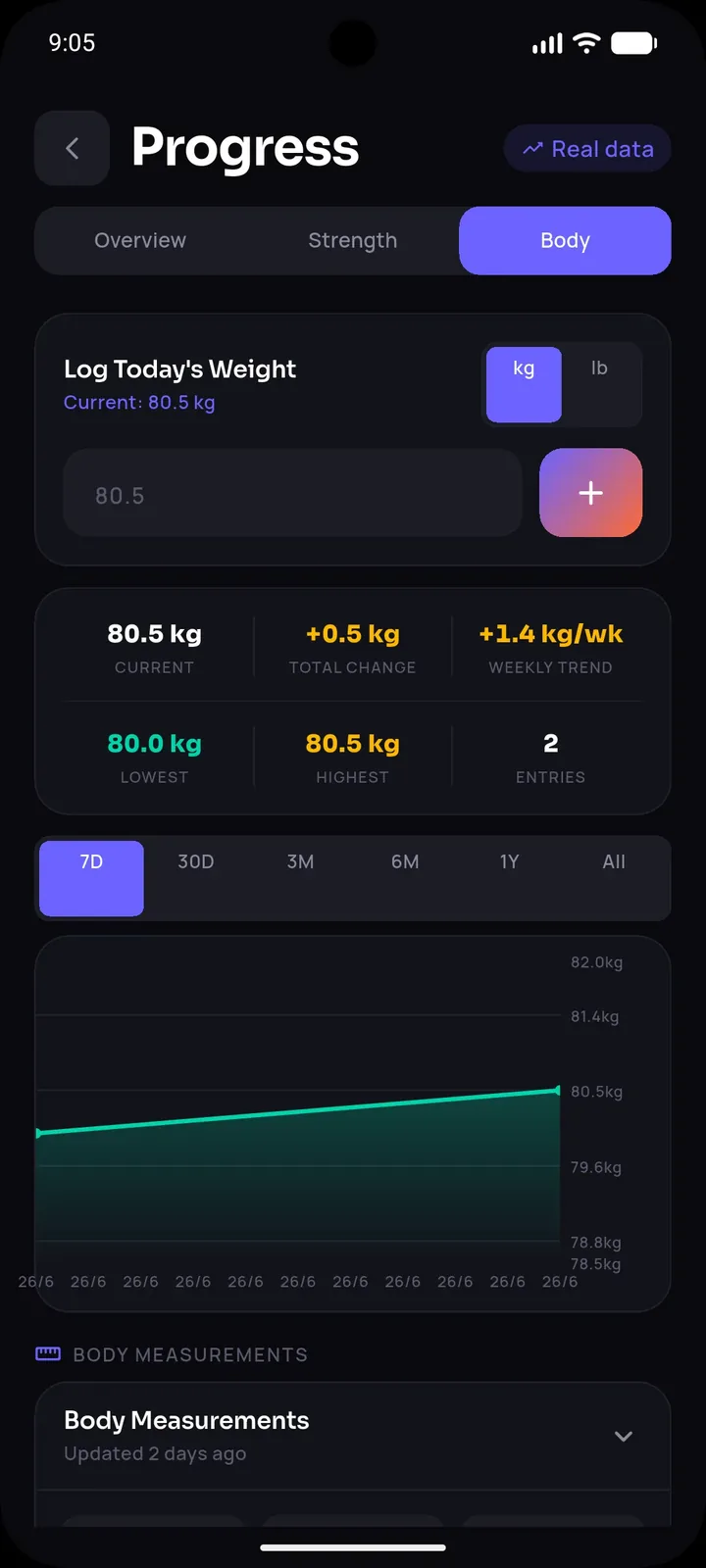
SetForge's Progress Analytics includes body measurement tracking alongside training volume, strength progression, and estimated 1RM — so your physical changes and your training data live in the same place rather than a separate notes app or spreadsheet. Progress photos are also supported and stored on-device, giving you a visual record to pair with your measurement trends over time.
Having both in one place makes it easier to connect cause and effect — for example, noticing that a period of increased leg training volume in your logs lines up with a measurable change in thigh measurements a few weeks later.
Interpreting Measurement Trends Correctly
A single measurement session tells you very little — the value is in the trend across multiple sessions over months. Expect natural fluctuation from water retention, time of day, and normal variability; don't overreact to a single measurement that seems off if the broader multi-month trend is still moving in the direction you want.
A Simple Monthly Tracking Routine
- First of the month, same time of day: Take waist, chest, arm, and thigh measurements.
- Same session: Take progress photos in consistent lighting and poses.
- Compare against last month, not day to day — look for the trend, not a single data point.
Frequently Asked Questions
Why doesn't my weight change even though I feel like I'm making progress?
Simultaneous fat loss and muscle gain can largely offset each other on the scale — body measurements and photos are more likely to reveal the actual change happening.
How often should I take body measurements?
Every 2-4 weeks is generally sufficient — more frequent measuring tends to just capture normal day-to-day fluctuation rather than meaningful change.
Are progress photos stored securely in SetForge?
Progress photos in SetForge are stored on-device, giving you control over that personal visual record.
Which measurement is most useful for tracking fat loss specifically?
Waist measurement at the navel is one of the most commonly used and useful indicators for tracking fat loss trends over time.
Should I worry if one month's measurement looks worse than the last?
Not necessarily — normal fluctuation happens between individual measurements; focus on the multi-month trend rather than reacting to a single session.
The Bottom Line
Body weight alone can hide real progress, especially when fat loss and muscle gain happen simultaneously. Tracking measurements and progress photos consistently — same method, same conditions, every few weeks — reveals the physical changes the scale can't, and keeps you motivated by showing progress that's actually happening.