Push-pull-legs (PPL) is one of the most recommended splits in strength training, and for good reason — it groups muscles logically by movement pattern and scales easily from three to six days a week. The problem isn't the split itself; it's that a lot of people copy a generic PPL template without understanding why it's structured the way it is, and end up with an imbalanced or poorly sequenced version of it.
The Logic Behind Push-Pull-Legs
The split groups exercises by the direction of force relative to your body: push movements (chest, shoulders, triceps), pull movements (back, biceps), and legs (quads, hamstrings, glutes, calves). This grouping means each session hits muscles that work together and recover together, minimizing the overlap that would otherwise force you to under-recover one muscle group to adequately train another.
Structuring Each Day Correctly
- Push day: Start with a heavy compound press (bench, overhead press), then move to secondary pressing movements, finishing with isolation work for shoulders and triceps.
- Pull day: Lead with a heavy compound pull (deadlift variation or heavy row), follow with vertical/horizontal pulling variety, finish with bicep isolation.
- Legs day: Open with a primary squat or hinge movement, add unilateral work (lunges, split squats), finish with isolation for hamstrings, quads, and calves.
The common mistake is starting each session with isolation work "to warm up" — compound lifts should come first while you're freshest, with isolation work reserved for the end of the session.
Choosing Your Weekly Frequency
- 3 days/week (PPL once): Good for beginners or those with limited time; each muscle group trained once weekly.
- 6 days/week (PPL twice): Doubles frequency per muscle group, generally better for intermediate/advanced lifters chasing hypertrophy.
- PPL + rest days interspersed: A common approach is Push/Pull/Legs/Rest/Push/Pull/Legs/Rest, balancing frequency with recovery.
Stop losing workouts in your camera roll.
SetForge turns saved Instagram & TikTok workout videos into structured, trackable training programs — automatically.
Building and Tracking a PPL Program With SetForge
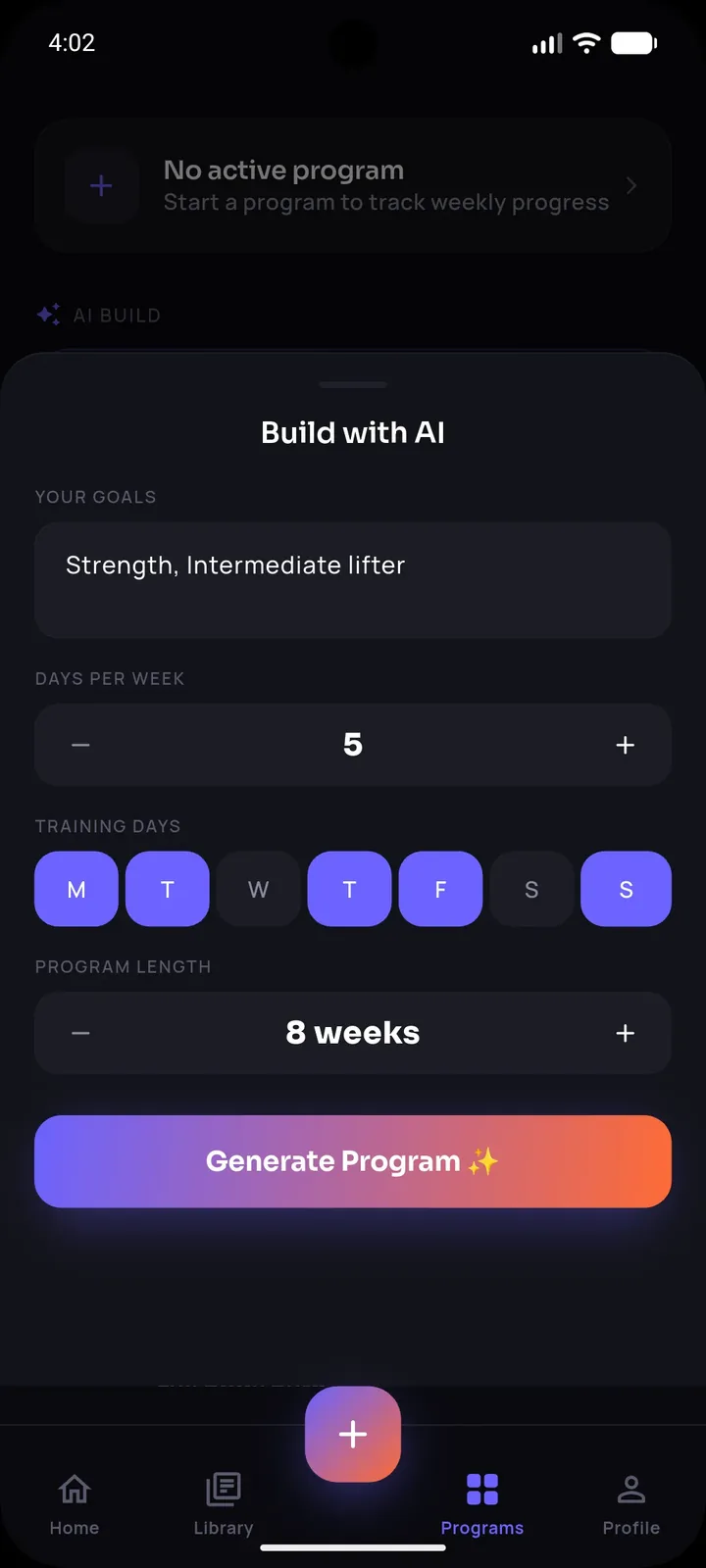
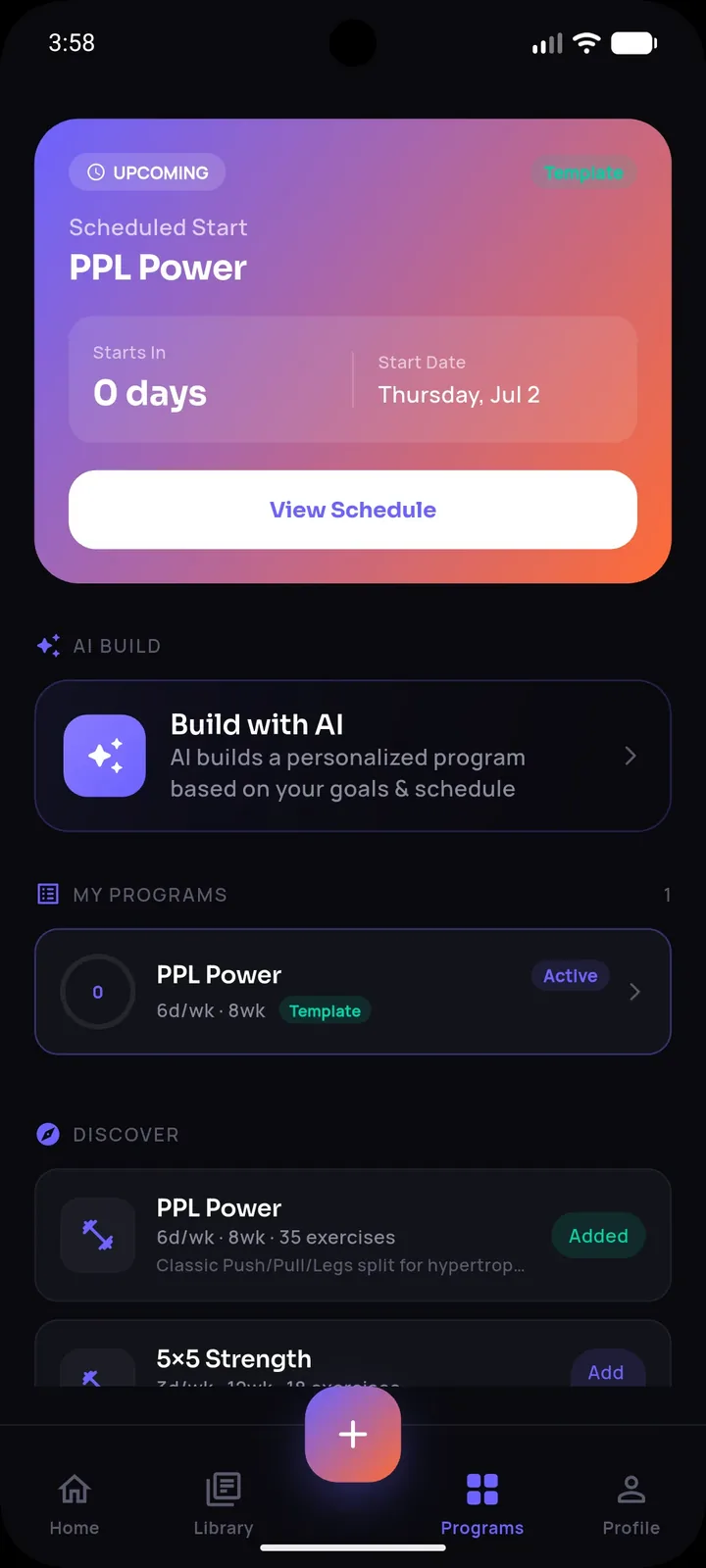
SetForge's Program Builder is designed specifically for structured multi-week splits like push-pull-legs, and it tracks your exact position in the program — so if you took a few days off, it knows whether you left off mid-push-day or about to start legs, rather than leaving you to remember and re-plan yourself. You can set it up as a 3-day, 6-day, or fully custom PPL variation.
Because SetForge's exercise library is filterable by muscle group, building each day's exercise selection (and finding substitutions when equipment is limited) is straightforward, and its Progress Analytics breaks down training volume by muscle group — useful for confirming your push, pull, and leg days are actually balanced rather than one category quietly getting more attention than the others.
Common PPL Mistakes to Avoid
- Neglecting legs — the most commonly skipped or shortened day in a PPL split, despite being a third of the program
- Copying someone else's exact program without adjusting for your own recovery capacity and schedule
- Not progressing the compound lifts — PPL only works long-term if you're adding weight or reps over time on the core movements
- Ignoring core work entirely — a well-rounded PPL program should include some direct core training, often tacked onto pull or leg days
Frequently Asked Questions
Is push-pull-legs better than an upper/lower split?
Neither is objectively better — PPL suits people who can train more frequently (5-6 days) and want higher per-muscle-group frequency, while upper/lower works well for 3-4 day schedules.
How many exercises should each PPL day include?
4-6 exercises per day is typical — one or two compound movements followed by supporting and isolation work for that day's muscle groups.
Can I build a custom PPL split in SetForge?
Yes — SetForge's Program Builder supports custom multi-week splits including standard, modified, or fully custom PPL structures.
How do I know if my PPL split is balanced across muscle groups?
SetForge's Progress Analytics includes a muscle group breakdown of your training volume, making imbalances easy to spot.
What if I miss a day in my PPL rotation?
Simply continue where you left off at your next session — SetForge's Program Builder tracks your position, so a missed day doesn't require re-planning the whole split.
The Bottom Line
Push-pull-legs works because it groups muscles by movement pattern and recovery needs — but only if each day is structured correctly (compounds first, isolation last) and legs get the same attention as push and pull. Track your position in the split, keep an eye on muscle group balance, and progress the compound lifts consistently, and PPL delivers exactly what it's known for.