The home gym versus commercial gym debate usually gets framed as a competition, but the more useful question isn't which is objectively better — it's how to build a routine that actually takes advantage of whichever one you have access to, without constantly wishing you had the other.
What Each Setup Is Genuinely Good At
- Commercial gyms: Access to a huge range of equipment, heavier weight availability, machines for controlled isolation work, and no space constraints.
- Home gyms: Zero commute time, no waiting for equipment, complete schedule flexibility, and lower long-term cost once initial equipment is purchased.
Neither setup is universally superior — the "best" one is whichever you'll actually use consistently, and the routine should be built around that reality rather than an idealized setup you don't have.
Building a Commercial Gym Routine
With access to a full range of equipment, the main challenge is usually planning around busy hours and machine availability rather than equipment limitations. Structure your routine with a primary movement and 1-2 backup alternatives in case your first-choice equipment is occupied, so a busy gym doesn't derail your whole session.
Building a Home Gym Routine
With more limited equipment, the challenge shifts to substitution and creativity — building a full routine around dumbbells, bands, and bodyweight work rather than assuming access to machines and a full barbell setup. This isn't a compromise as much as a different (and still fully effective) training approach.
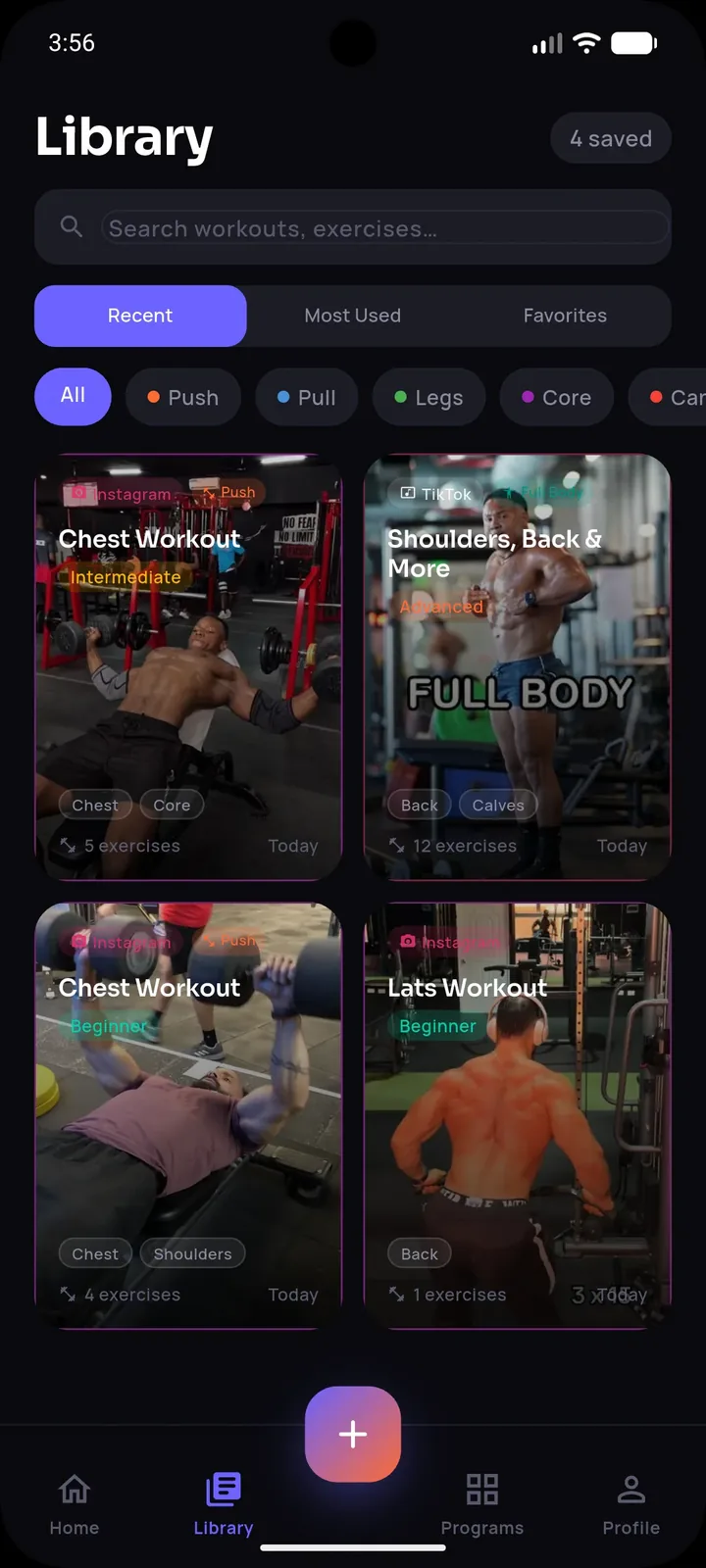
Stop losing workouts in your camera roll.
SetForge turns saved Instagram & TikTok workout videos into structured, trackable training programs — automatically.
How SetForge Adapts to Either Setup
SetForge's 500+ exercise library is filterable by muscle group, which makes it straightforward to find equipment-appropriate exercises whether you're standing in a fully equipped commercial gym or a home setup with just dumbbells. If you import a workout video that assumes equipment you don't have access to that day, you can quickly swap in an equivalent movement targeting the same muscle group without breaking the structure of the workout.
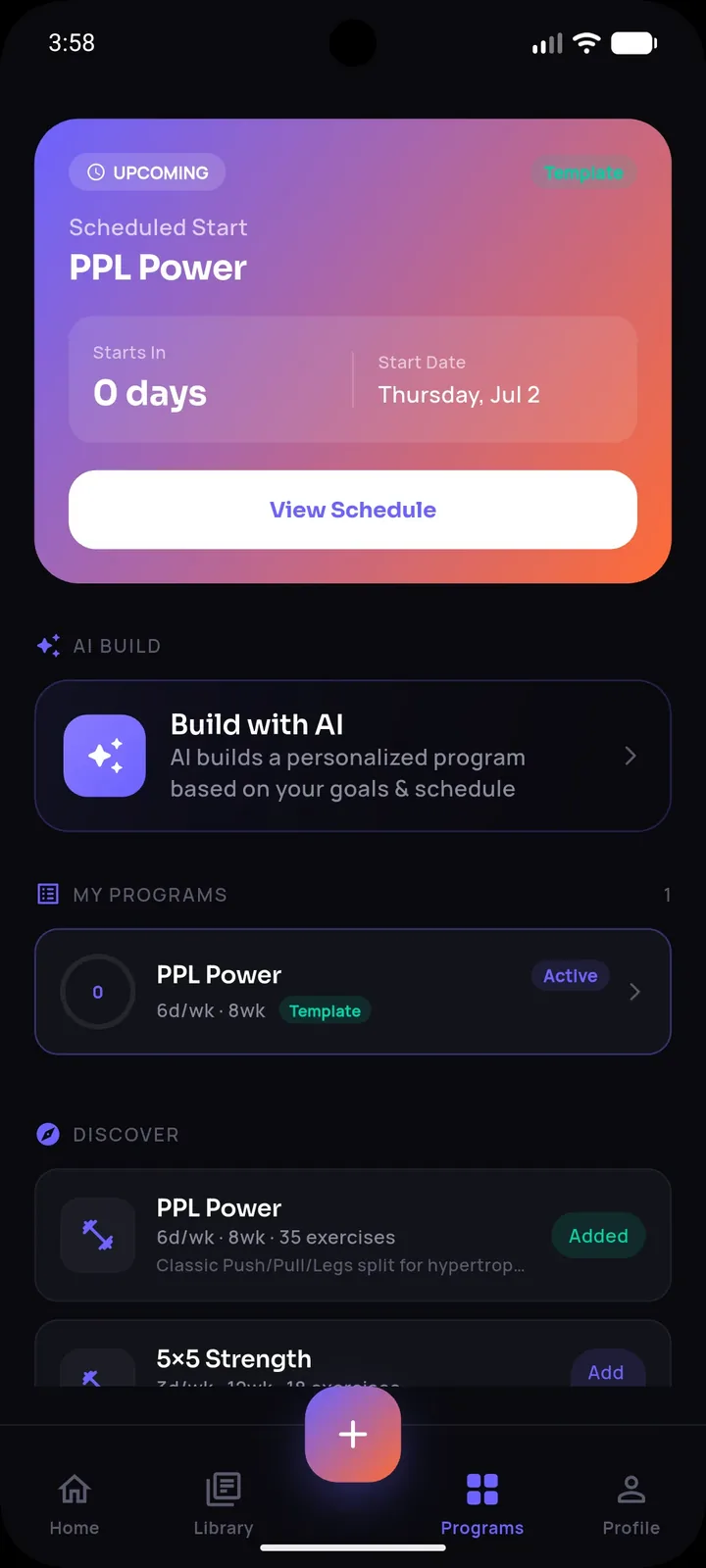
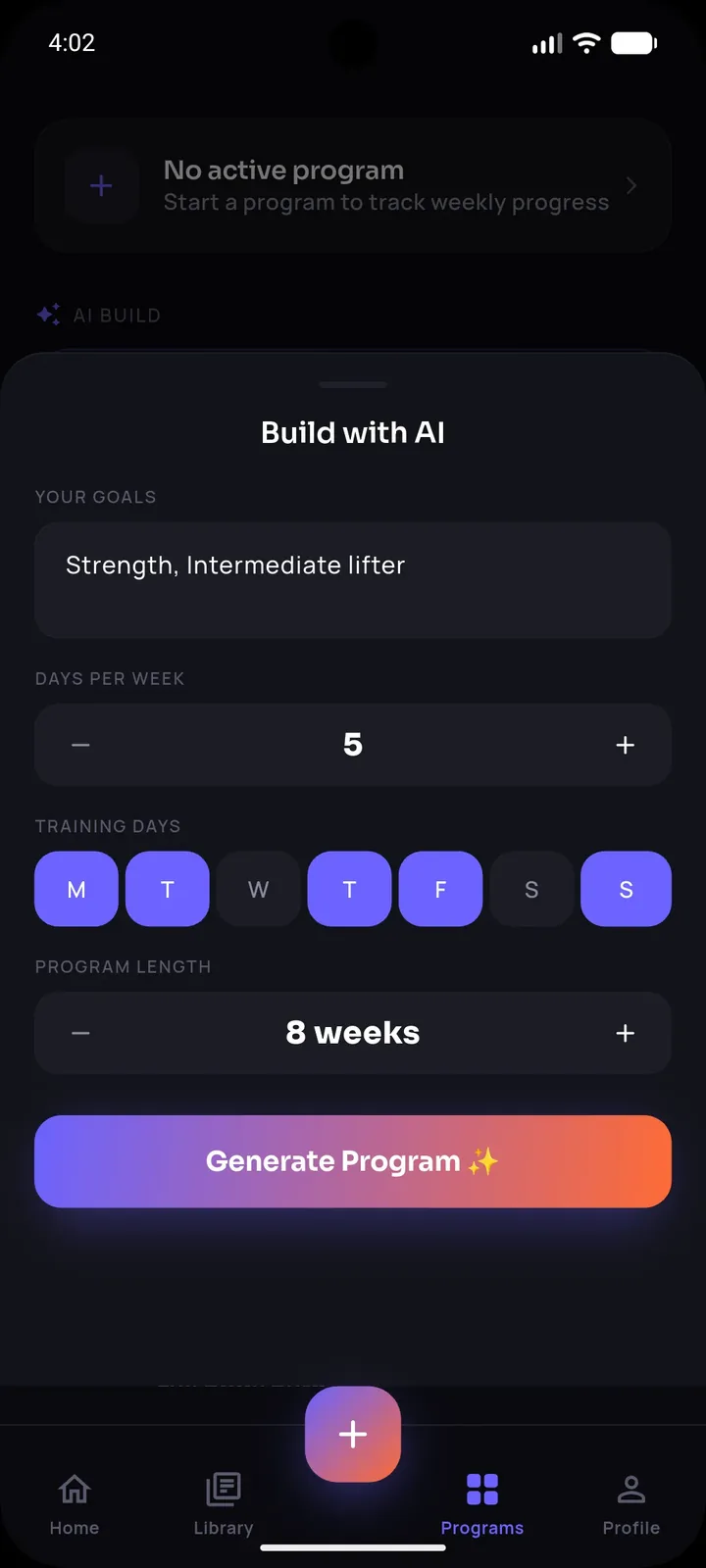
For people who train in both settings — a commercial gym some days, home on others — SetForge's Program Builder lets a single multi-week program account for both, so your split doesn't need to be rebuilt every time your location changes.
Combining Both When You Have Access to Each
Some people genuinely benefit from mixing both — using a commercial gym for heavy compound lifts that need a full barbell setup and rack, and home sessions for shorter accessory or conditioning work on days a gym trip isn't practical. This hybrid approach works well precisely because it plays to what each setup does best rather than forcing one to fully replace the other.
Choosing Based on Your Actual Constraints
Before deciding, be honest about your actual constraints: commute time, gym cost, available space at home, and how much you're motivated by an external environment versus training privately. The "right" choice is the one that removes friction from actually training consistently, not the one that sounds more serious on paper.
Frequently Asked Questions
Can I build real strength training at home without a barbell?
Yes — dumbbells, bands, and bodyweight progressions can build significant strength, especially for beginner and intermediate lifters, though very advanced strength goals may eventually benefit from barbell access.
Should I switch between home and commercial gym workouts within the same program?
Yes, if that fits your schedule — SetForge's Program Builder can accommodate a mixed setup within a single structured program.
How do I substitute exercises when I'm missing equipment at either location?
Use SetForge's exercise library filtered by muscle group to find an equivalent movement that targets the same area with whatever equipment is actually available.
Is a commercial gym membership worth it if I already have home equipment?
It depends on your goals — if you need heavier barbell work or specific machines your home setup lacks, a hybrid approach can be worthwhile even with home equipment already in place.
What's the biggest mistake people make when they train in both settings?
Treating them as two completely separate training plans instead of one unified program that adapts exercise selection based on location.
The Bottom Line
Home and commercial gyms each have genuine strengths, and the better routine is the one built around whichever setup — or combination — you'll actually use consistently. A filterable exercise library and a flexible program structure make it easy to adapt the same training goals to either environment without starting from scratch.