Gamified elements — streaks, badges, experience points — have become standard in fitness apps, and reactions to them are mixed: some people find real motivational value, others dismiss it as a gimmick layered on top of what should just be genuine discipline. The honest answer is more nuanced than either extreme.
Why Gamification Can Genuinely Help
Humans respond to visible progress and small, frequent rewards — this isn't a fitness-specific phenomenon, it's a broadly studied behavioral pattern. A visible streak creates a small, immediate incentive not to break the chain, which can provide just enough extra motivation on a day you're on the fence about training. Badges and achievements give a sense of milestone progress that raw numbers (like an estimated 1RM) don't always convey as viscerally.
Where Gamification Can Backfire
- Streak anxiety — some people feel excessive stress about "breaking" a streak, leading to overtraining or working out while genuinely injured or sick just to preserve a number
- Gaming the system — logging a token, low-effort "workout" purely to maintain a streak, rather than actually training meaningfully
- Losing sight of actual progress — focusing on streak length rather than whether training volume, strength, or other real metrics are actually improving
The difference between helpful and harmful gamification often comes down to how it's designed and how a person personally relates to it.
Stop losing workouts in your camera roll.
SetForge turns saved Instagram & TikTok workout videos into structured, trackable training programs — automatically.
How SetForge Approaches Gamification
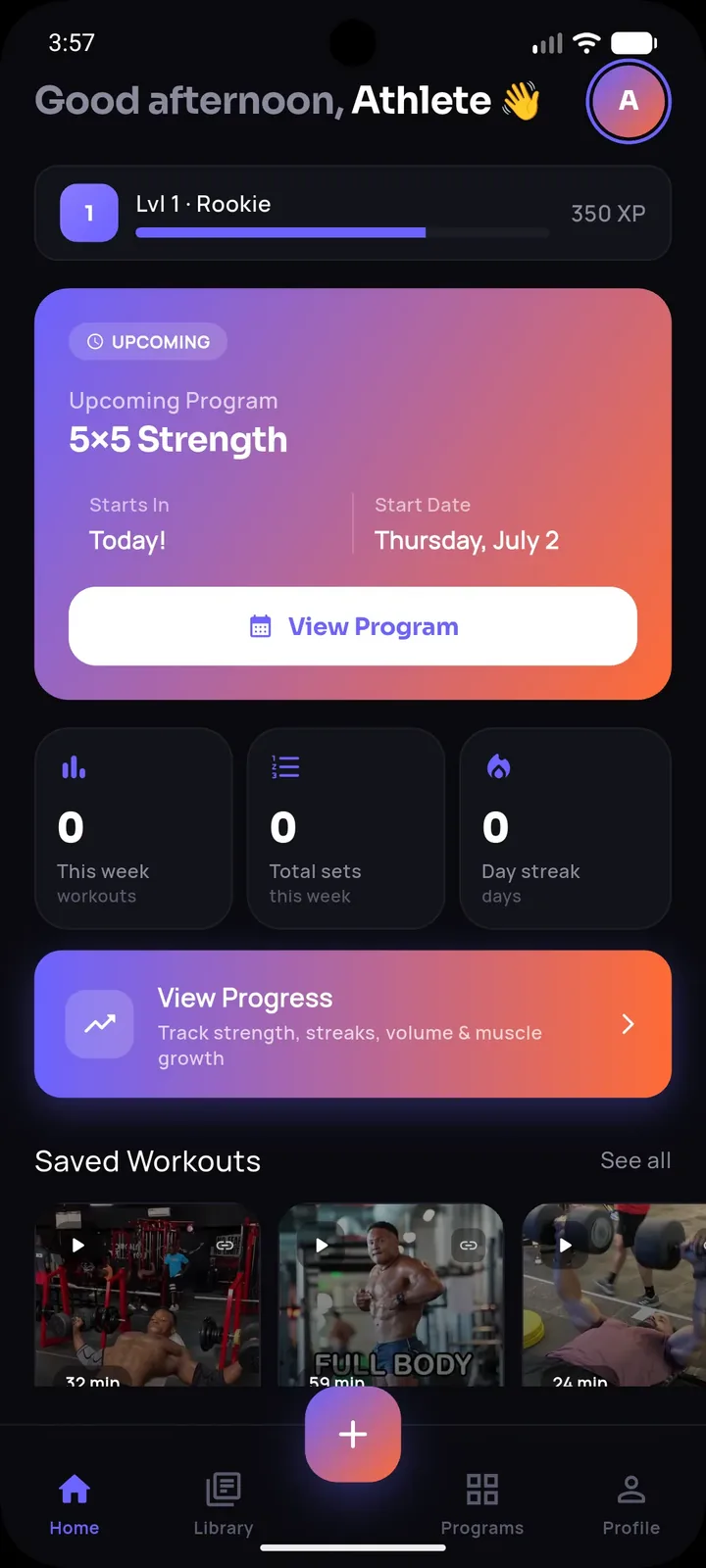
SetForge includes achievements and badges (with XP and streak tracking) as a motivational layer, deliberately positioned alongside — not instead of — real progress data. Streaks and achievements sit next to SetForge's Progress Analytics (training volume, strength progression, estimated 1RM), so the gamified elements complement genuine training data rather than becoming the only thing you're chasing. Notably, SetForge doesn't include a leaderboard — the emphasis is on your own consistency and progress rather than competitive comparison against others, which can introduce unhelpful pressure for some people.
Using Gamification Constructively
- Let a streak nudge you on borderline days, but don't train through injury or illness purely to preserve it — health comes first
- Check your real progress data periodically, not just streak length, to confirm the underlying training is actually working
- Treat a broken streak as a non-event — restart it without dwelling, rather than spiraling into an all-or-nothing mindset
Who Benefits Most From Gamified Tracking
People who respond well to visible, incremental progress markers and enjoy a light sense of accomplishment tend to benefit most. People prone to anxiety around numbers or "perfect record" thinking may want to treat streaks as optional rather than a primary source of motivation, leaning more on the underlying training data instead.
Frequently Asked Questions
Do streaks actually improve long-term consistency?
For many people, yes, they provide a helpful nudge on borderline days — but they work best as a supplement to genuine progress tracking, not a replacement for it.
Does SetForge have a leaderboard comparing me to other users?
No — SetForge does not include a leaderboard; its gamification is focused on your own achievements, XP, and streaks rather than competitive comparison.
Should I work out while sick just to preserve a streak?
No — health should always come first; a broken streak from resting during illness or injury is a reasonable, healthy outcome, not a failure.
What's the risk of relying too heavily on gamified elements?
Losing sight of actual training progress in favor of chasing a streak number, or logging low-effort sessions purely to maintain one.
Is gamification necessary for consistent training?
No — some people train consistently without any gamified elements at all; it's a helpful supplementary tool for those who respond well to it, not a requirement.
The Bottom Line
Gamification genuinely helps many people stay more consistent by making progress visible and rewarding in small, frequent ways — but it works best paired with real training data, not as a replacement for it. Use streaks and achievements as a light motivational nudge, and keep your actual progress metrics as the real measure of whether training is working.