One-rep max (1RM) — the heaviest weight you could lift for a single rep — is a useful benchmark, but actually testing it regularly is both risky and unnecessary. Most lifters get far more practical value from an estimated 1RM, calculated from submaximal sets, than from repeatedly maxing out.
What Estimated 1RM Actually Measures
Estimated 1RM uses a formula (several exist, like Epley or Brzycki) that takes the weight and reps from a submaximal set and calculates an approximate true maximum. Lift 185 lbs for 5 reps, for instance, and a formula might estimate your 1RM at roughly 210 lbs — without you ever having to attempt a genuine single-rep max lift.
Why Estimated 1RM Is More Practical Than Testing It Directly
- Lower injury risk — true 1RM attempts push technical breakdown and joint stress to their limit
- No special testing day required — it's calculated from your normal working sets, not a separate max-out session
- More frequent data points — you get an estimate from nearly every session instead of once every few months
- Good enough accuracy for tracking trends — the point is seeing the number move over time, not nailing an exact figure
How to Use Estimated 1RM to Guide Training
Rather than treating it as a single impressive number, use estimated 1RM as a trend line. A rising estimate over weeks and months means your training is working, regardless of whether any single session felt impressive. A flat or declining trend across multiple lifts might indicate accumulated fatigue, insufficient recovery, or a program that needs adjusting.
Stop losing workouts in your camera roll.
SetForge turns saved Instagram & TikTok workout videos into structured, trackable training programs — automatically.
How SetForge Calculates and Tracks This Automatically
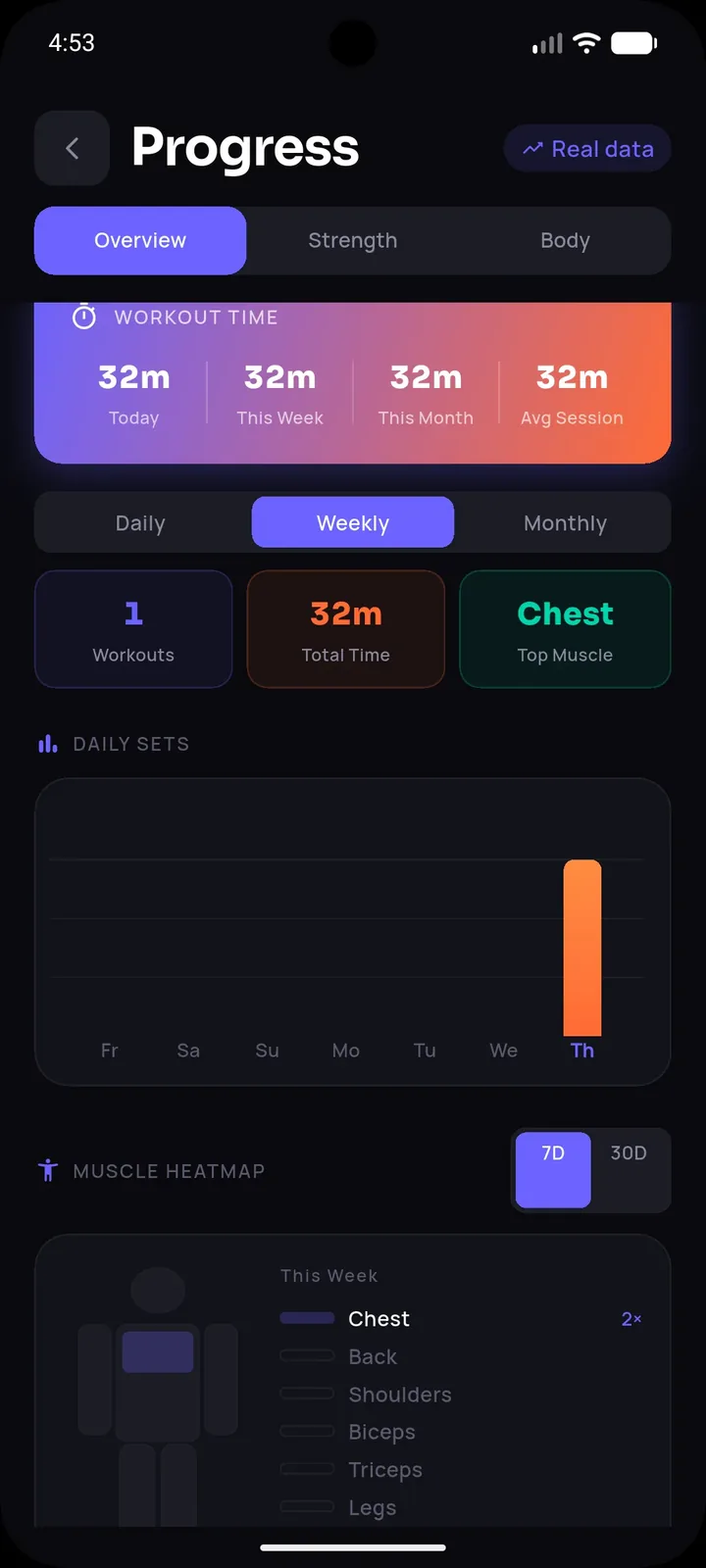
SetForge's Progress Analytics calculates your estimated one-rep max automatically from logged working sets — you don't need to run a separate testing protocol or do the math yourself. Every time you log a set for a given lift, the estimate updates, building a visible trend line over time for each major movement in your training.
This works whether the workout came from SetForge's manual builder or was imported via AI from a saved video — the estimate is calculated the same way regardless of where the set data originated, so your 1RM trend reflects your entire training history, not just workouts built one specific way.
What a Realistic Rate of Improvement Looks Like
Beginners often see estimated 1RM climb noticeably almost every week for their first few months. Intermediate and advanced lifters should expect a much slower climb — a few percent over several months is normal and healthy, not a sign of failure. Comparing your own rate of progress to a beginner's is one of the most common sources of unnecessary frustration.
When Estimated 1RM Isn't the Right Metric
For endurance-focused training, high-rep hypertrophy work, or general fitness goals not centered on maximal strength, estimated 1RM is a nice-to-have data point rather than a primary metric — training volume and consistency matter more for those goals than chasing a rising strength number.
Frequently Asked Questions
Is estimated 1RM accurate compared to an actual max-out attempt?
It's an approximation, generally accurate enough to track meaningful trends over time, though it can vary somewhat from a true tested max depending on the formula and rep range used.
How often should I check my estimated 1RM?
It updates automatically with every logged set in SetForge, so there's no need for a separate testing session — just check the trend periodically, like monthly.
Do I need to do low-rep sets to get an estimated 1RM?
No — the formula works from any submaximal set with a reasonably challenging weight and rep count, not just heavy, low-rep sets.
Why hasn't my estimated 1RM moved in a few weeks?
Short plateaus are normal, especially for intermediate/advanced lifters — check your training volume and recovery before assuming something is wrong.
Does SetForge calculate this for every exercise or just major lifts?
Progress Analytics can track estimated 1RM for any logged exercise, though it's most meaningful for primary compound lifts like squat, bench, and deadlift.
The Bottom Line
Estimated one-rep max gives you a practical, low-risk way to track real strength progress without the danger and hassle of testing an actual max regularly. Treat it as a trend line rather than a single number, and let it guide your sense of whether your training is actually working over weeks and months.