Three people can do the exact same exercise — say, a barbell squat — and get meaningfully different adaptations depending on how they structure sets, reps, rest, and intensity around it. Understanding the difference between hypertrophy, strength, and endurance training isn't academic; it directly determines whether your training actually matches your goal.
Hypertrophy Training: Building Size
Hypertrophy-focused training generally uses moderate rep ranges (roughly 6-12, though higher ranges can work too), moderate rest (60-90 seconds), and total weekly volume in a relatively high range per muscle group. The goal is maximizing total productive volume and mechanical tension across a session, not necessarily lifting the heaviest possible weight for a single rep.
Strength Training: Building Maximal Force
Strength-focused training uses lower rep ranges (typically 1-5), heavier loads relative to your 1RM, and longer rest periods (2-5 minutes) to allow more complete recovery between near-maximal efforts. The goal is maximizing the weight you can move for a small number of reps, which relies heavily on neural efficiency alongside muscular capacity.
Endurance Training: Building Sustained Capacity
Endurance-focused resistance training uses higher rep ranges (15+), shorter rest periods, and lighter relative loads, targeting muscular and metabolic endurance rather than maximal force or size. This overlaps with conditioning-style training and is less about a single number and more about sustained output over time.
Stop losing workouts in your camera roll.
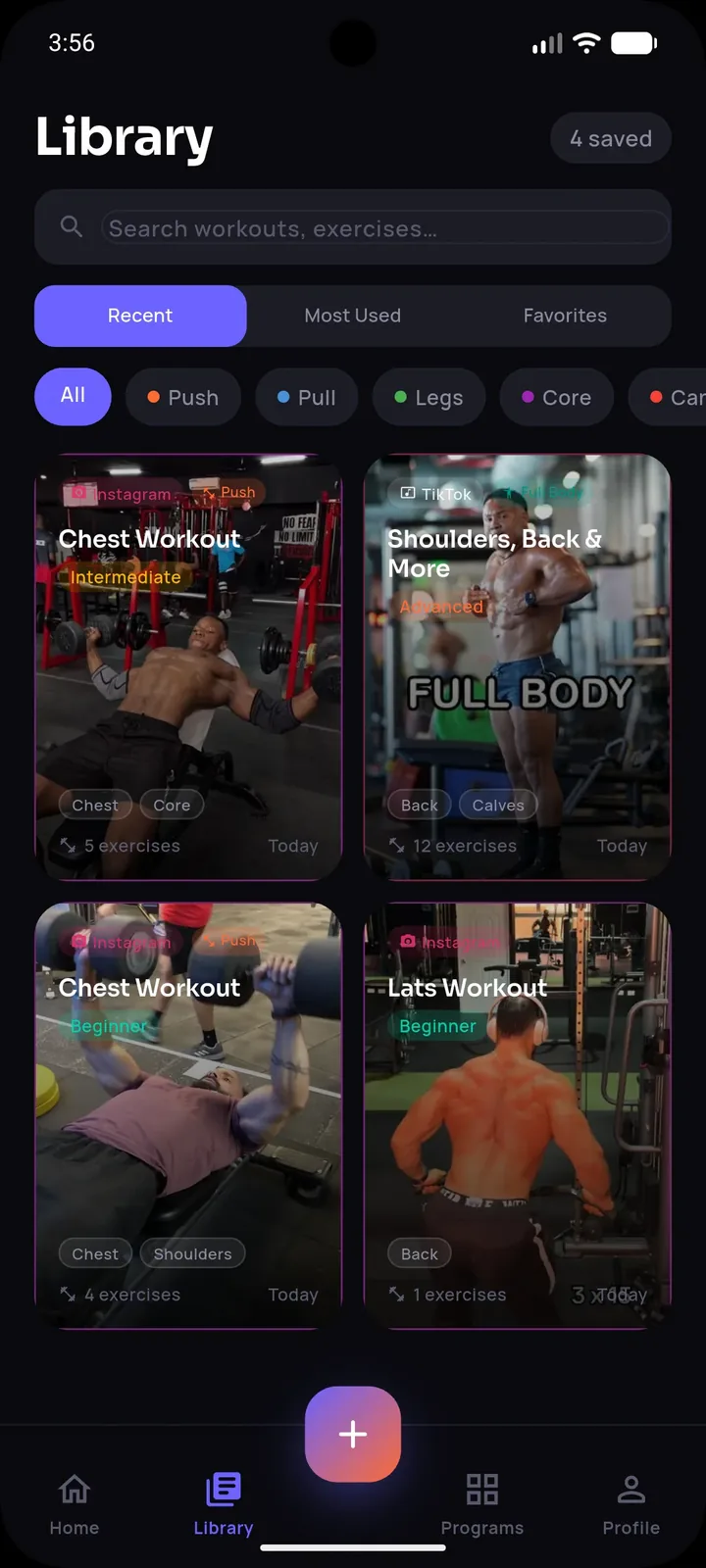
SetForge turns saved Instagram & TikTok workout videos into structured, trackable training programs — automatically.
Can You Train for More Than One Goal at Once?
To some degree, yes — many hypertrophy-style programs produce meaningful strength gains as a byproduct, especially for beginners and intermediates. However, dedicated specialization in one direction (pure strength peaking, for example) generally requires narrowing your rep ranges and volume distribution more specifically than a general "do a bit of everything" approach allows.
How SetForge Supports Training for Any of These Goals
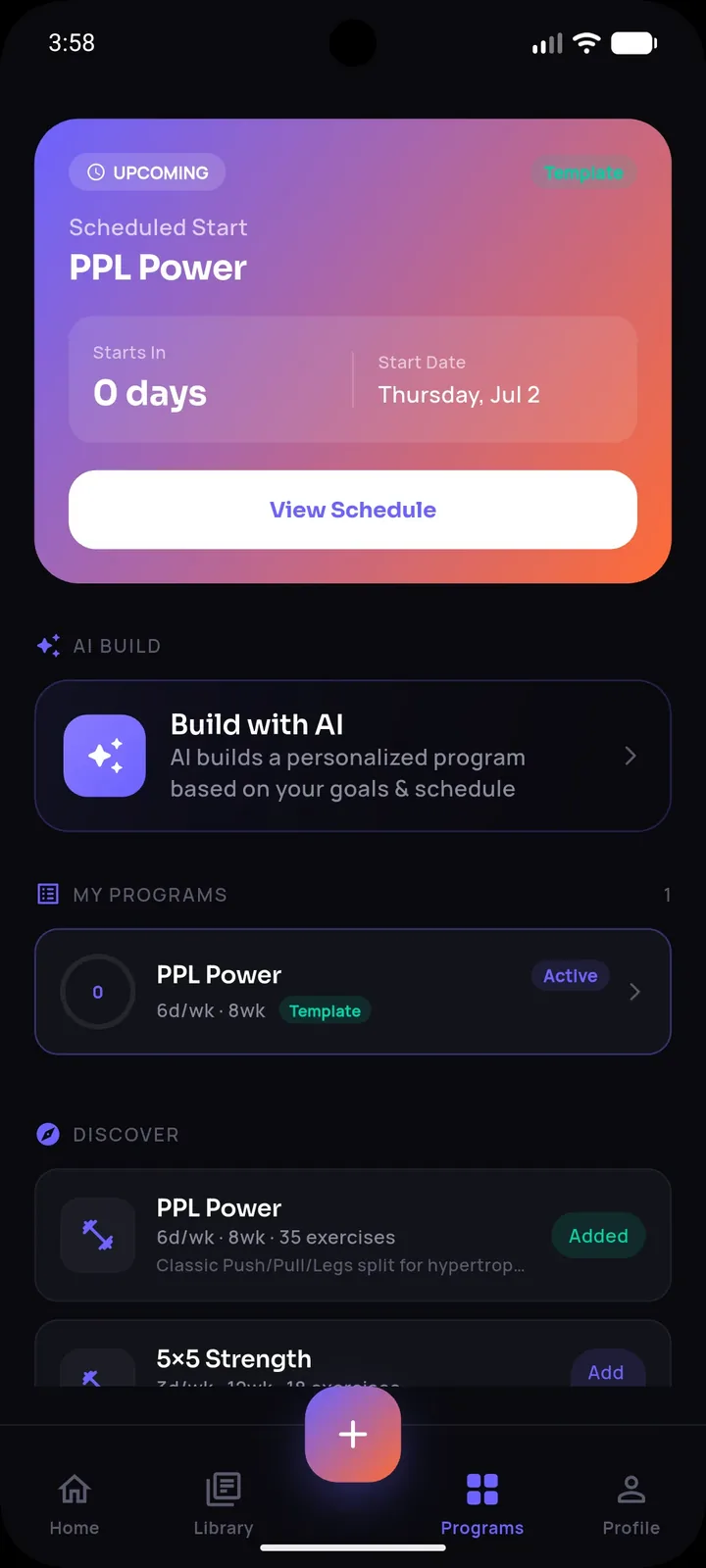
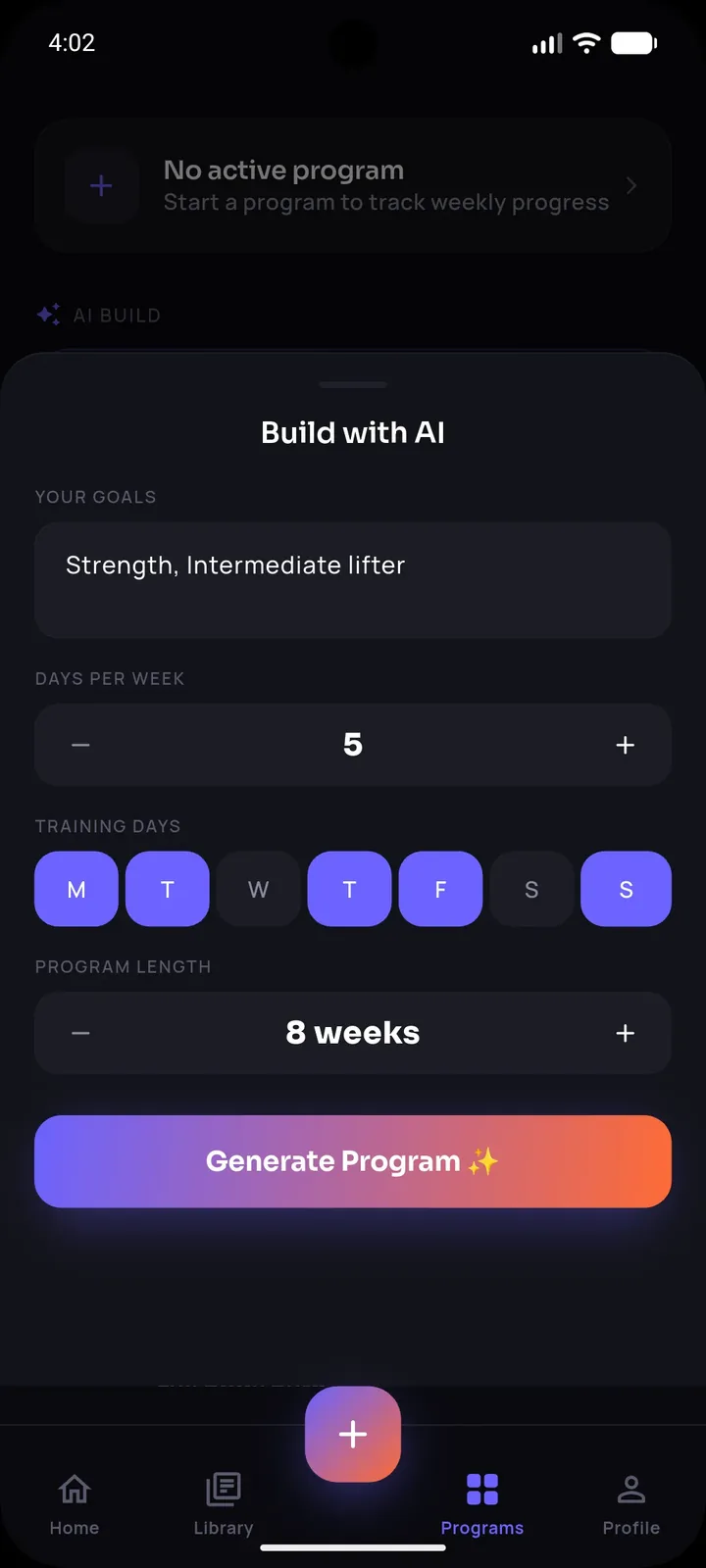
SetForge's manual workout builder lets you configure sets, reps, and rest periods explicitly for whichever goal you're training toward, and its Program Builder can structure a multi-week plan around hypertrophy, strength, or a blended approach. Because Progress Analytics tracks training volume, strength progression, and estimated 1RM, you can directly verify whether your actual training matches the goal you intended — for example, confirming your rep ranges have genuinely stayed in a strength-appropriate zone rather than drifting toward a hypertrophy pattern by accident.
Choosing the Right Focus for Your Goal
- Want to look more muscular: Prioritize hypertrophy-range training with sufficient weekly volume per muscle group.
- Want to lift heavier numbers: Prioritize lower-rep strength training with adequate rest and gradual load progression.
- Want better conditioning or muscular stamina: Prioritize higher-rep endurance-style training with shorter rest.
- Want general fitness: A blended approach across all three, rotated through different training blocks, works well.
Frequently Asked Questions
Can I build strength and size at the same time?
Yes, especially for beginners and intermediates — hypertrophy-style training often produces meaningful strength gains, though dedicated strength specialization eventually requires more targeted lower-rep training.
What rep range is best for hypertrophy specifically?
Roughly 6-12 reps is commonly used and well supported, though research suggests a wider range can also drive growth if taken close to failure with sufficient volume.
Why does strength training use longer rest periods?
Heavier, near-maximal lifts place greater demand on the nervous system, requiring more complete recovery to maintain quality across subsequent sets.
How do I set up hypertrophy vs strength training in SetForge?
Configure your sets, reps, and rest periods for your specific goal in the manual workout builder, and use Progress Analytics to confirm your actual logged training matches that intended structure.
Is endurance training useful for people who mainly want to build muscle?
It can play a supporting role (conditioning, work capacity) but shouldn't replace the bulk of dedicated hypertrophy-focused training if muscle size is the primary goal.
The Bottom Line
Hypertrophy, strength, and endurance training all use the same basic tools — sets, reps, rest, and load — configured differently to produce different adaptations. Knowing which combination matches your actual goal, and tracking whether your real training matches that intention, is what makes the difference between training hard and training toward the right outcome.