"AI coach" gets thrown around loosely in fitness apps, and the term covers everything from a genuinely useful data-driven assistant to little more than a scripted chatbot with a few if-then rules. It's worth understanding clearly what an AI workout coach can realistically do well, so you can use one effectively instead of expecting either too much or too little from it.
What AI Coaching Actually Means in Practice
A real AI workout coach uses your training history — the exercises you've done, the weights and reps you've logged, how consistently you've trained — to generate recommendations and explanations. This is fundamentally different from a static program that doesn't know anything about you specifically. The value comes from the personalization and the reasoning behind recommendations, not from the AI "knowing everything" about fitness in the abstract.
What AI Coaches Do Well
- Analyzing patterns in your own data — noticing that your bench press has stalled for three weeks while your squat keeps progressing, for example
- Answering specific questions with context — "why did you suggest reducing my volume this week" is a fair question, and a good AI coach can explain its reasoning based on your recent training
- Adjusting recommendations based on your actual history, rather than generic advice that ignores what you've been doing
- Being available instantly, any time, without scheduling a call or waiting for a response
What AI Coaches Can't Replace
- Real-time form correction — an AI chat interface can't watch your squat depth or bar path the way a coach standing next to you can
- Nuanced injury management — anything involving pain, medical history, or physical therapy needs a qualified professional, not an app
- The accountability of a human relationship — some people train harder specifically because a real person is checking in, which an AI can't fully replicate
A good AI coach is honest about these boundaries rather than pretending to be a full replacement for professional guidance where it matters.
Stop losing workouts in your camera roll.
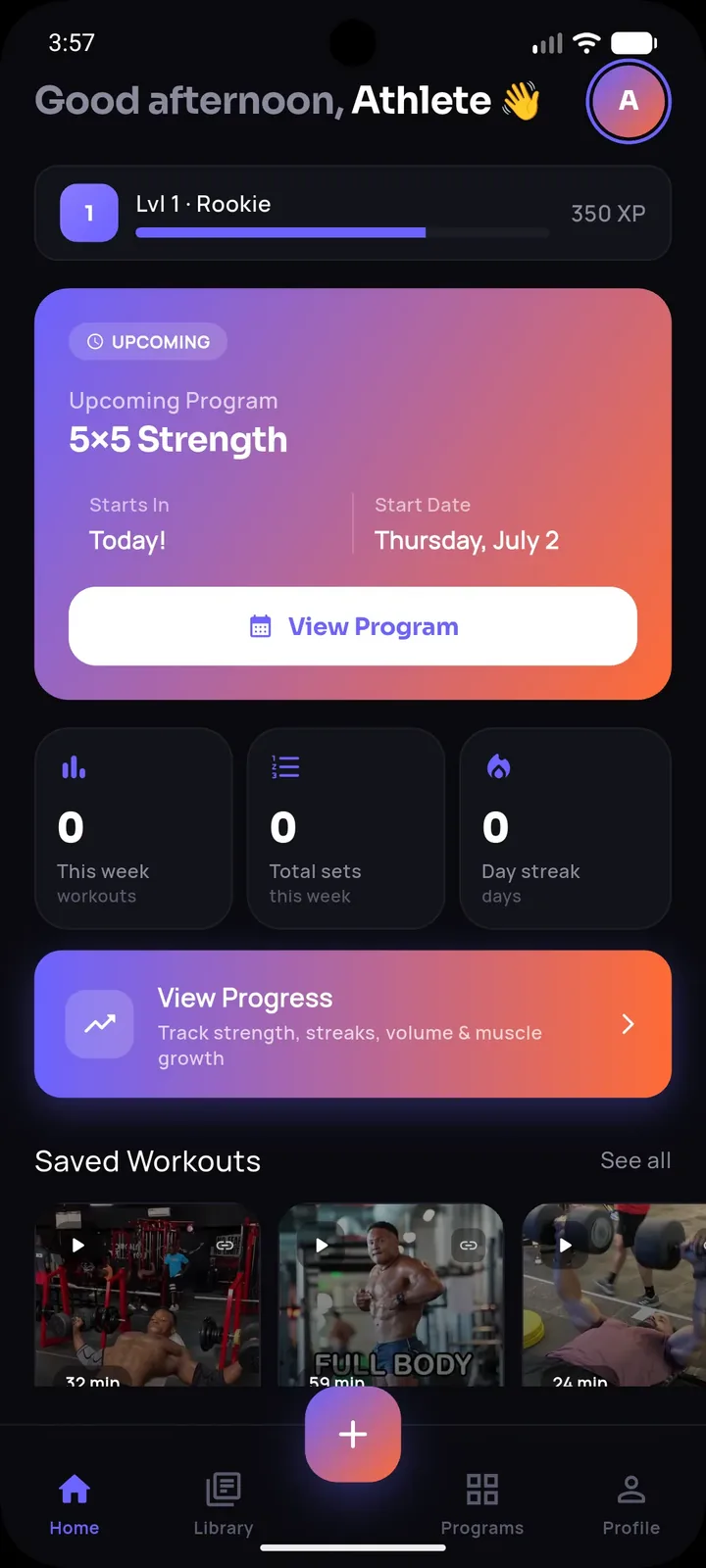
SetForge turns saved Instagram & TikTok workout videos into structured, trackable training programs — automatically.
How SetForge's AI Coach Fits This Picture
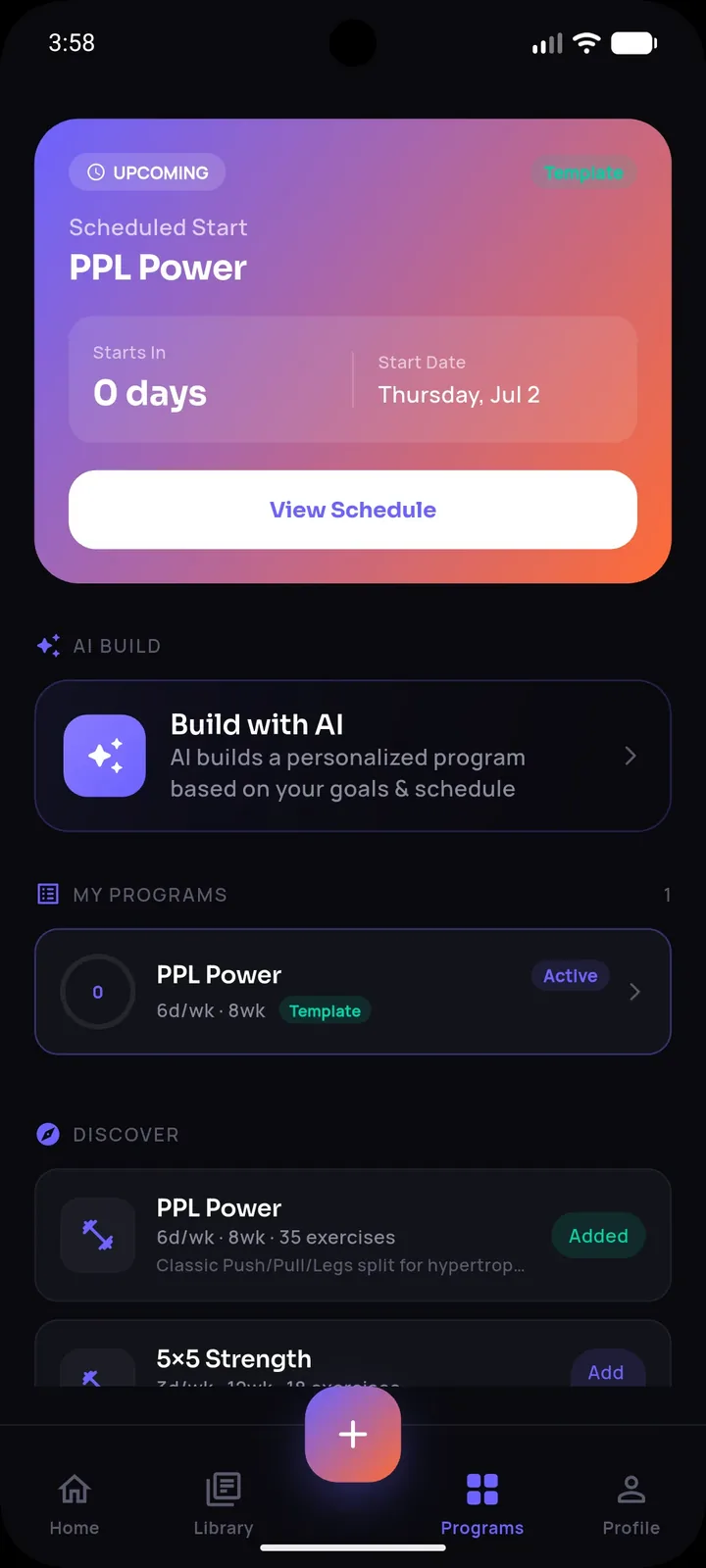
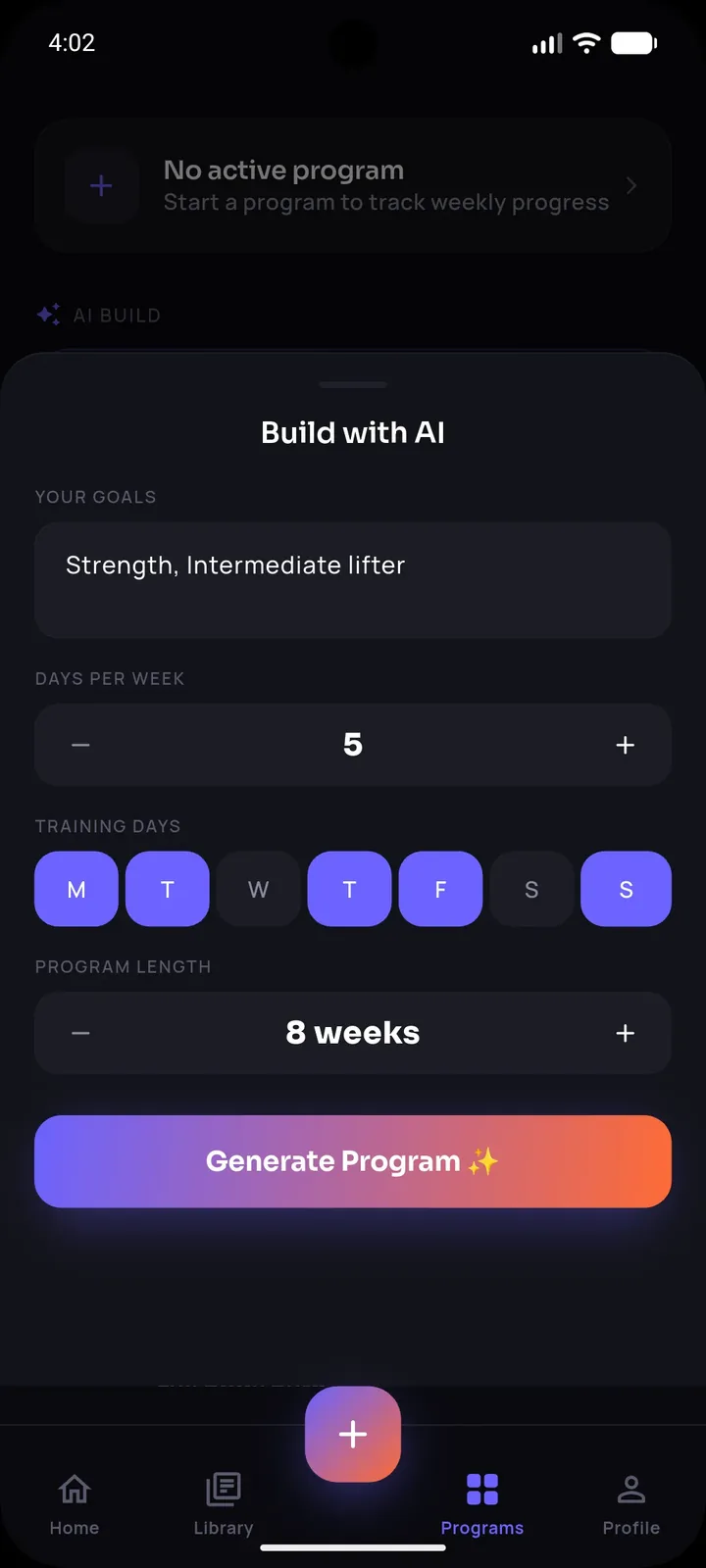
SetForge's AI Coach is chat-based and uses your full training history — every workout you've imported or logged — to give recommendations with actual reasoning behind them, not just a generic tip. Ask it why your progress has plateaued on a specific lift, and it can reference your logged volume and frequency for that movement rather than giving a one-size-fits-all answer. This is the core value proposition of AI coaching done well: grounded in your real data, explained clearly, available whenever you need it.
Getting the Most Out of an AI Coach
An AI coach is only as useful as the data behind it — the more consistently you log workouts (whether imported from video or built manually), the more specific and useful its recommendations become. Someone who's logged three months of consistent training will get meaningfully better guidance than someone who's used the app sporadically for a week.
When to Still See a Human Professional
If you're dealing with pain during exercise, recovering from an injury, or need form correction on a technically demanding lift, an AI coach isn't the right tool — a physical therapist, certified trainer, or physician is. Use AI coaching for programming guidance, progress analysis, and day-to-day training questions; use a human for anything involving your physical safety or medical history.
Frequently Asked Questions
Can an AI workout coach design my entire training program?
An AI coach can give programming recommendations based on your training history and goals, but it's not a substitute for professional guidance on medical or injury-related concerns.
Does SetForge's AI Coach know what I've actually trained?
Yes — it uses your full training history within the app to give recommendations grounded in your real logged performance, not generic advice.
Can AI coaching correct my exercise form?
Not in the way a human watching you train can — for real-time form correction, especially on technically demanding lifts, a qualified trainer or coach is still the better resource.
Is AI coaching worth it if I've only just started tracking my workouts?
It's useful from day one, but recommendations get more specific and valuable the more training history you build up over time.
What's the difference between a static program and an AI coach?
A static program doesn't adapt to you specifically, while an AI coach can reference your actual logged history and explain its reasoning for a given recommendation.
The Bottom Line
AI workout coaches are genuinely useful for data-driven, personalized programming guidance and instant answers grounded in your actual training history — but they're not a replacement for professional care around injuries or form correction. Used for what they're good at, an AI coach like SetForge's can meaningfully improve how you train; used as a substitute for medical advice, it can't.